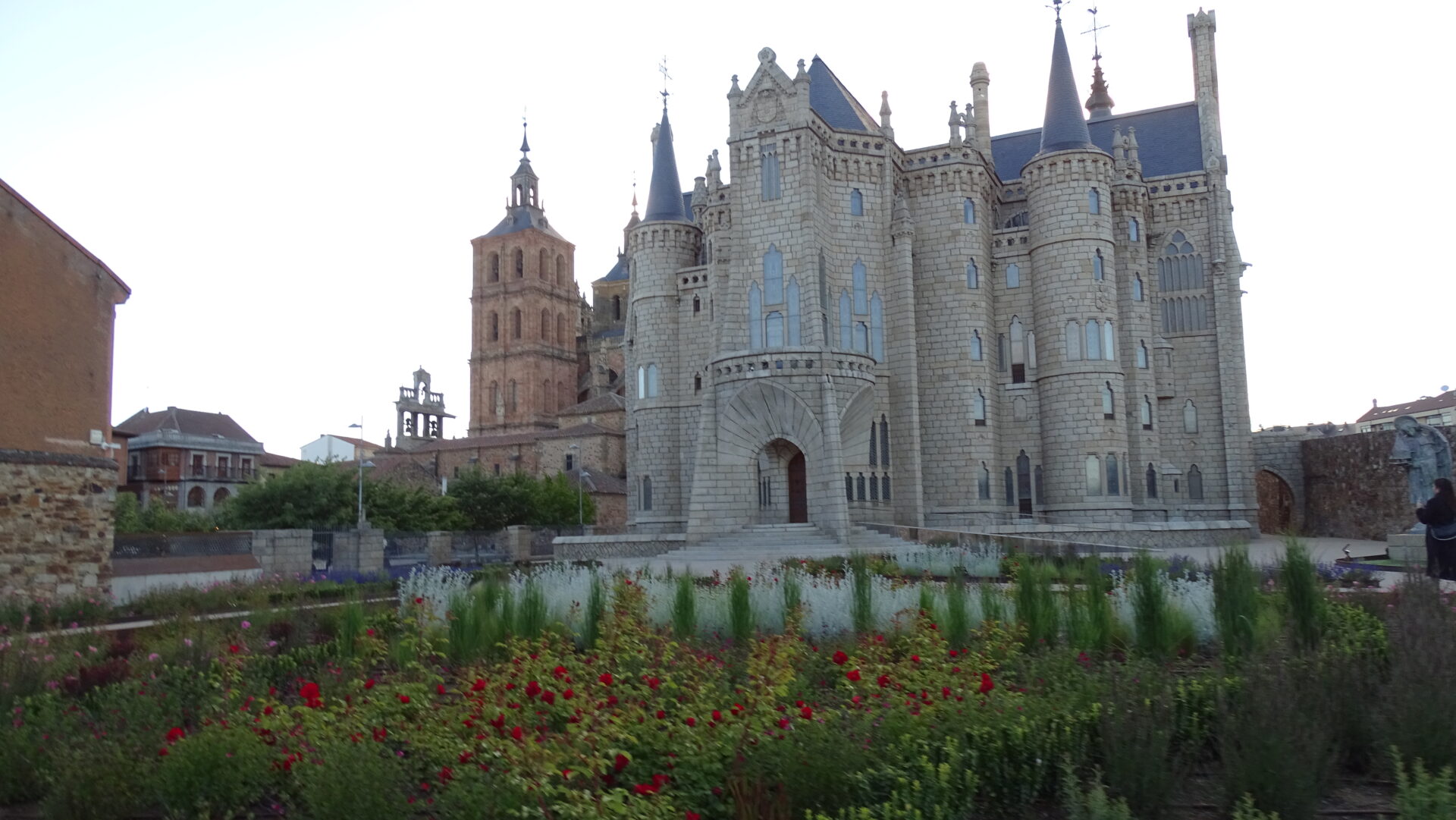
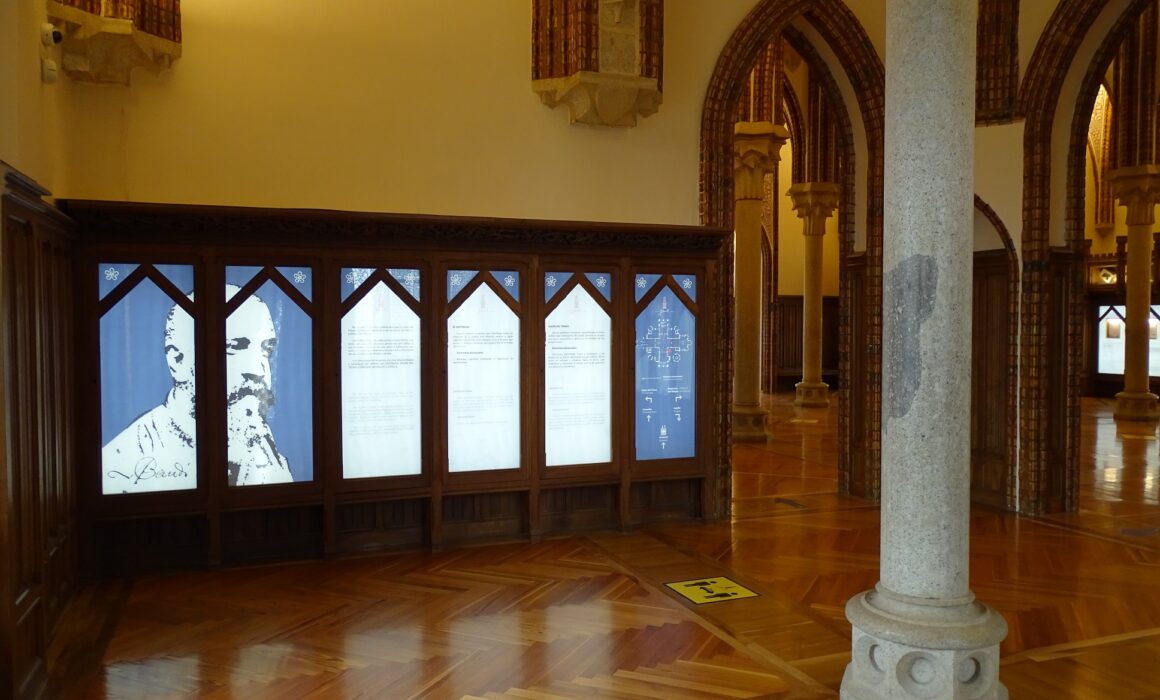
The Museum of the Paths of Gaudí Palace in Astorga has completed the project of musealization of the main floor. This floor deals with the history of the Palace itself and the architect who designed it. The central hall now displays the most relevant documents on the history and construction of the building, some of them signed by Gaudí himself, such as his acceptance of the work, some certifications and his resignation.
On the main floor Gaudí located the rooms for the bishop. In the lobby you can see a brief review of two of the most important people for the construction of the Palace: Gaudí and the bishop who thought of the Catalan architect after the fire that devastated, in late 1886, the old bishop’s palace: Juan Bautista Grau y Vallespinós.

With this musealization project, its director, Víctor Murias, wanted to give this floor a special history. The story of how Astorga came to have a Gaudí building. In this new musealization, pieces of great relevance are exhibited, such as the molds designed by Antonio Gaudí to make the ceramic pieces that decorate the ribs of the vaults and the profiles of doors and windows, handmade in Jiménez de Jamuz.
There are three monographic rooms dedicated to the architect, the project and the artists who decorated the palace. They display documents that refer to Gaudí’s influences, such as the analysis of medieval architecture carried out by the Frenchman Viollet-le-Duc, which had a profound influence on a young Gaudí; and elements of Bishop Grau himself, such as some of the publications he promoted, among others.

Astimismo, three new audiovisual elements have been arranged to travel with visitors to the late nineteenth and early twentieth century when the Palace began to take shape. During the past months, a selection and musealization of the main floor has been carried out with the selection of audiovisual material and pieces that give coherence to the entire exhibition. This project is in addition to the musealization of the first floor and basement.
Elevator
At the end of 2022 Patrimonio reported favorably the works for the installation of an elevator in the north tower of the Episcopal Palace of Astorga. In the coming months work will begin on the installation of an elevator in the north tower, in the shaft where Gaudí himself designed an elevator in the late nineteenth century.
This elevator will serve as access to the special tour of the ‘Hidden Palace’ that shows some of the most special elements of Gaudí’s Palace such as the lower decks and the upper terraces.