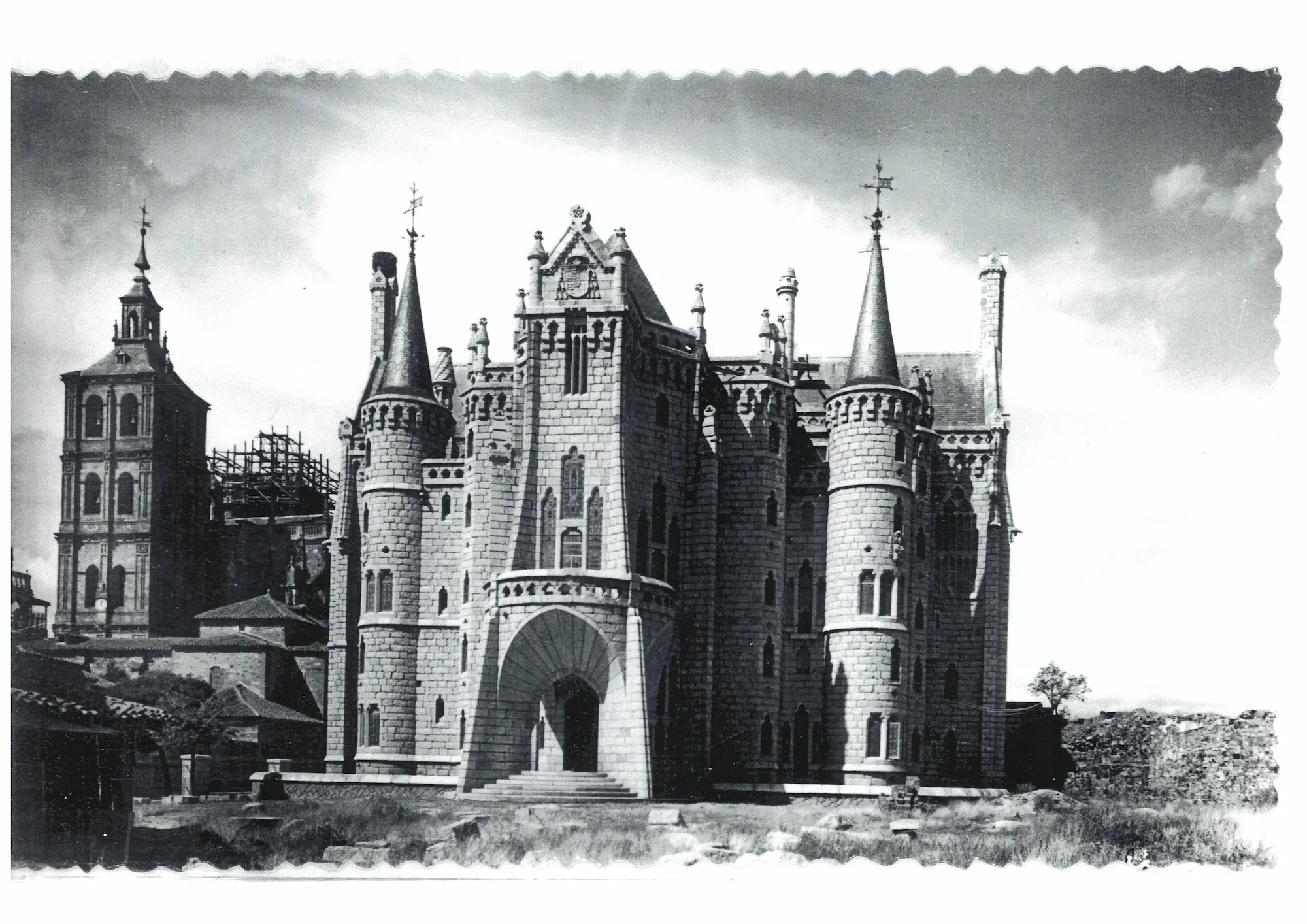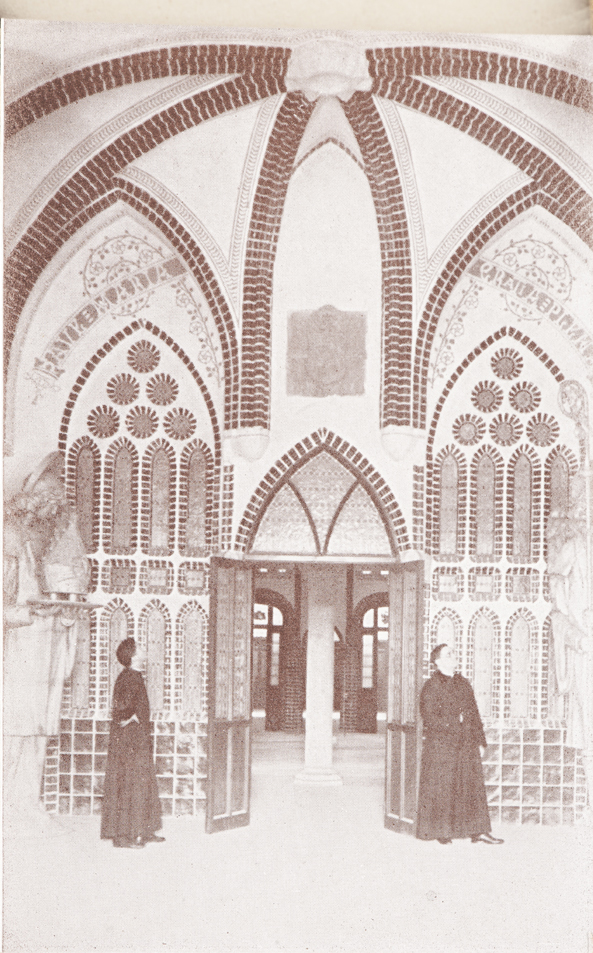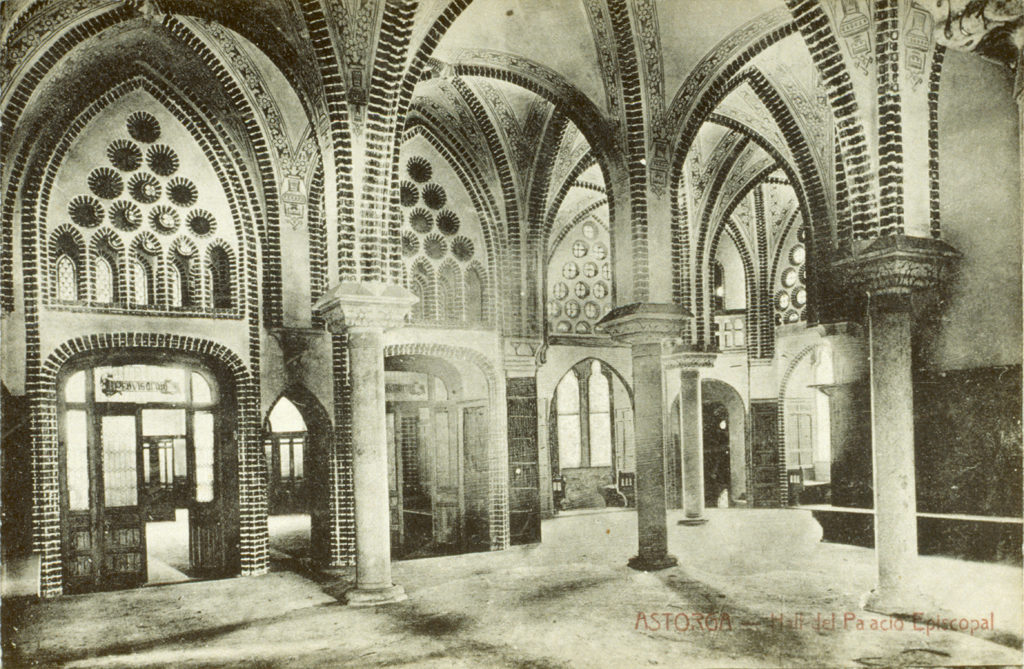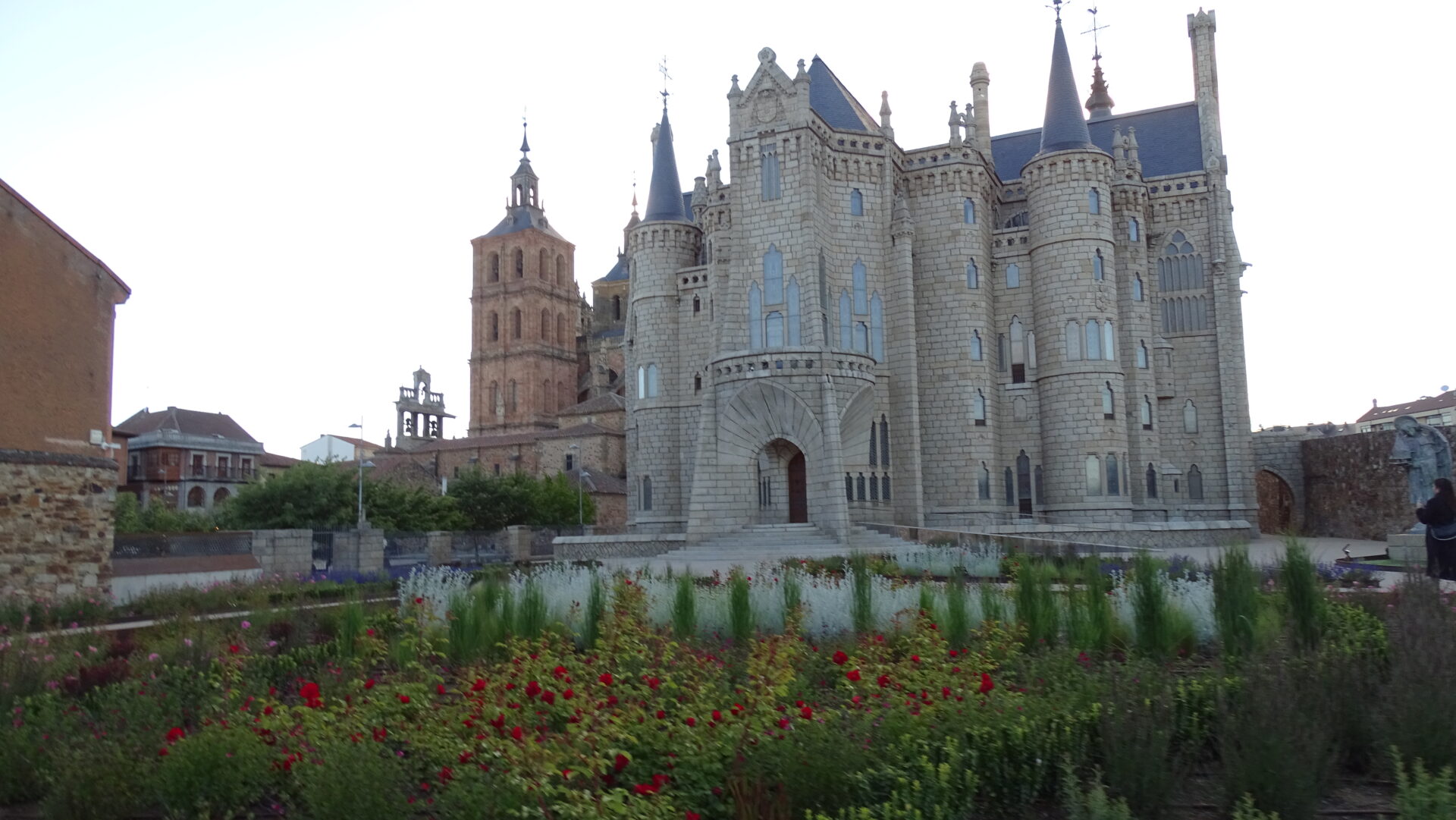
In 1886 Don Juan Bautista Grau y Vallespinós, a native of Reus, took possession of the diocese of Astorga, residing in the old episcopal palace, and on December 23 of that same year the primitive palace burned in flames. As the position of diocesan architect for the construction of the new palace was vacant, Bishop Grau proposed his fellow countryman Antonio Gaudí y Cornet, who took charge of the works from 1889 to 1893.
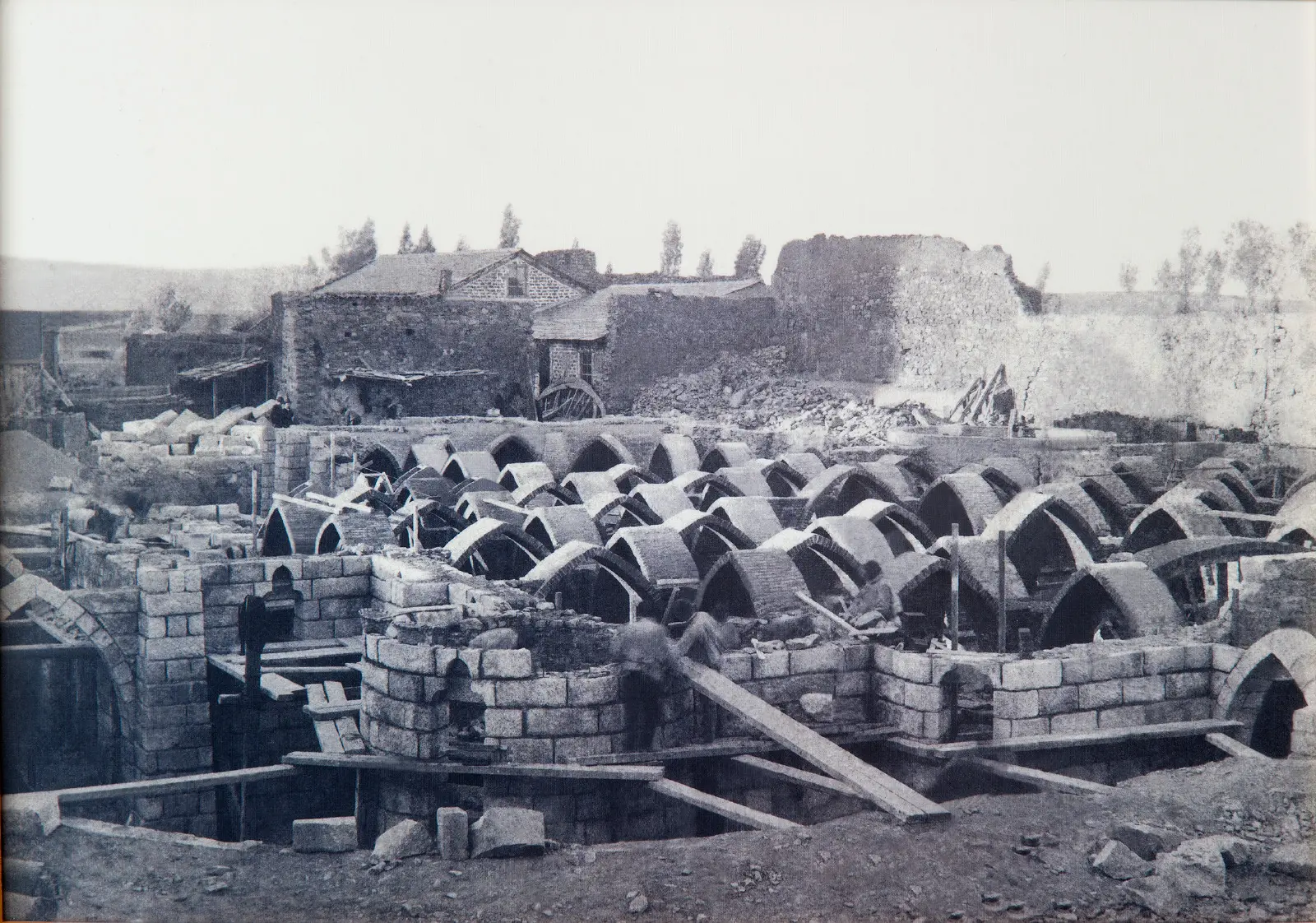
In December 1888, Gaudí travels to Astorga to see the site and the architectural environment. In February 1889, the Ministry approved the project, and the works were put out to public auction and awarded to the contractor Mr. Policarpo Arias in the amount of 168,520 pts.
On June 24, 1889, the prelate’s feast day, the first stone was laid. It was planned to finish the works of the Palace in June 1894, but the bishop died in 1893 and this fact will radically change the course of the works, paralyzed by the antagonism between Gaudí and the Diocesan Board.
Finally Antonio Gaudí resigned as architect director, very angry at the treatment received and stating: ” They will be unable to finish it and leave it uninterrupted“.
In 1905 D. Julián de Diego y Alcolea governed the diocese of Astorga and tried to convince Gaudí to return to work on the Palace but failed. The temple of the Sagrada Familia required all his attention and time.
Ricardo García-Guereta, who was diocesan of León, was appointed architect, concluding the works on October 12, 1913, with Bishop D. Julián de Diego y Alcolea as bishop. Julián de Diego y Alcolea was Bishop. Subsequently, with Bishop D. Antonio Senso Lázaro, the lack of concern for the palace was evident.
During the Civil War it was used as barracks and offices for the Falange and as lodging for national forces.
In 1956 Mr. José Castelltort, a bishop from Igualada, made the last adaptations to the second floor of the building with the intention of inhabiting it as soon as possible, but his sudden death prevented him from doing so.
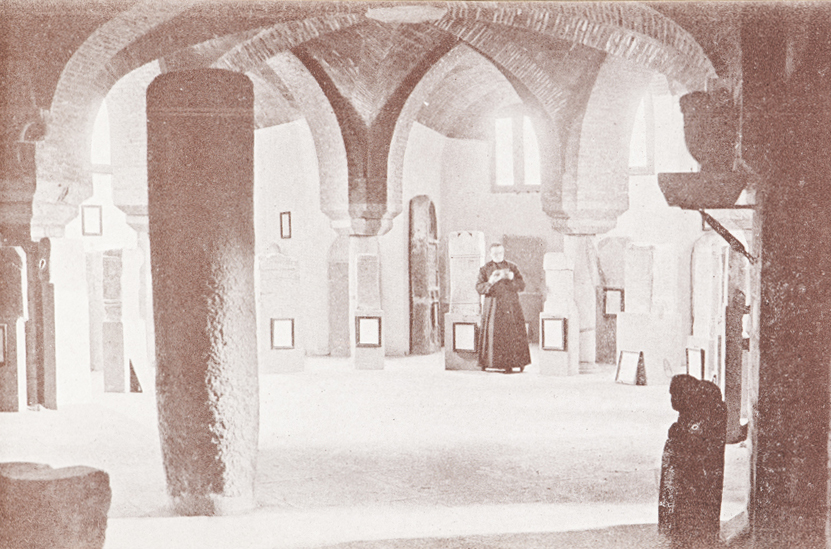
Marcelo González Martín will succeed him in the episcopal chair, who decides to reside definitively in the Seminary and to dedicate the Palace to the seat of the Museum of the Ways, which will open to the public in 1964.