First Floor






The second floor is dedicated to Gaudí, the Palace building and other authors who contributed to its construction.
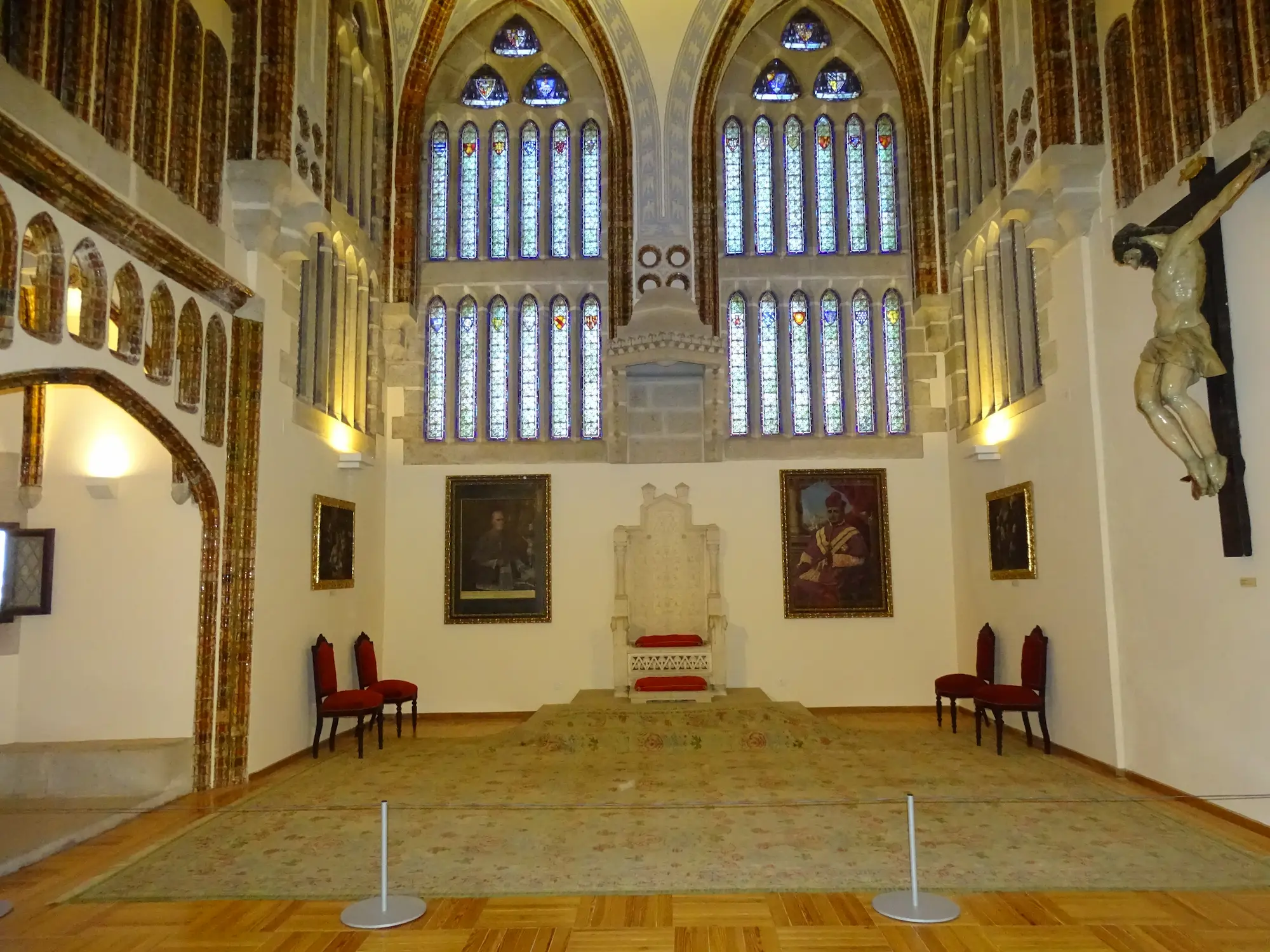
Throne Room
ROOM 1. THE PALACE BEFORE THE PALACE
In 1120 Queen Urraca donated a plot of land at the request of Bishop Pelayo, where a pagan temple used to stand. Everything points to the fact that this site is the same one on which we find ourselves and where the primitive palace was built. Medieval references are scarce and do not allow us to clearly define what it would look like. A building that survived the passage of time with multiple reforms until it was destroyed by a voracious fire in 1886.
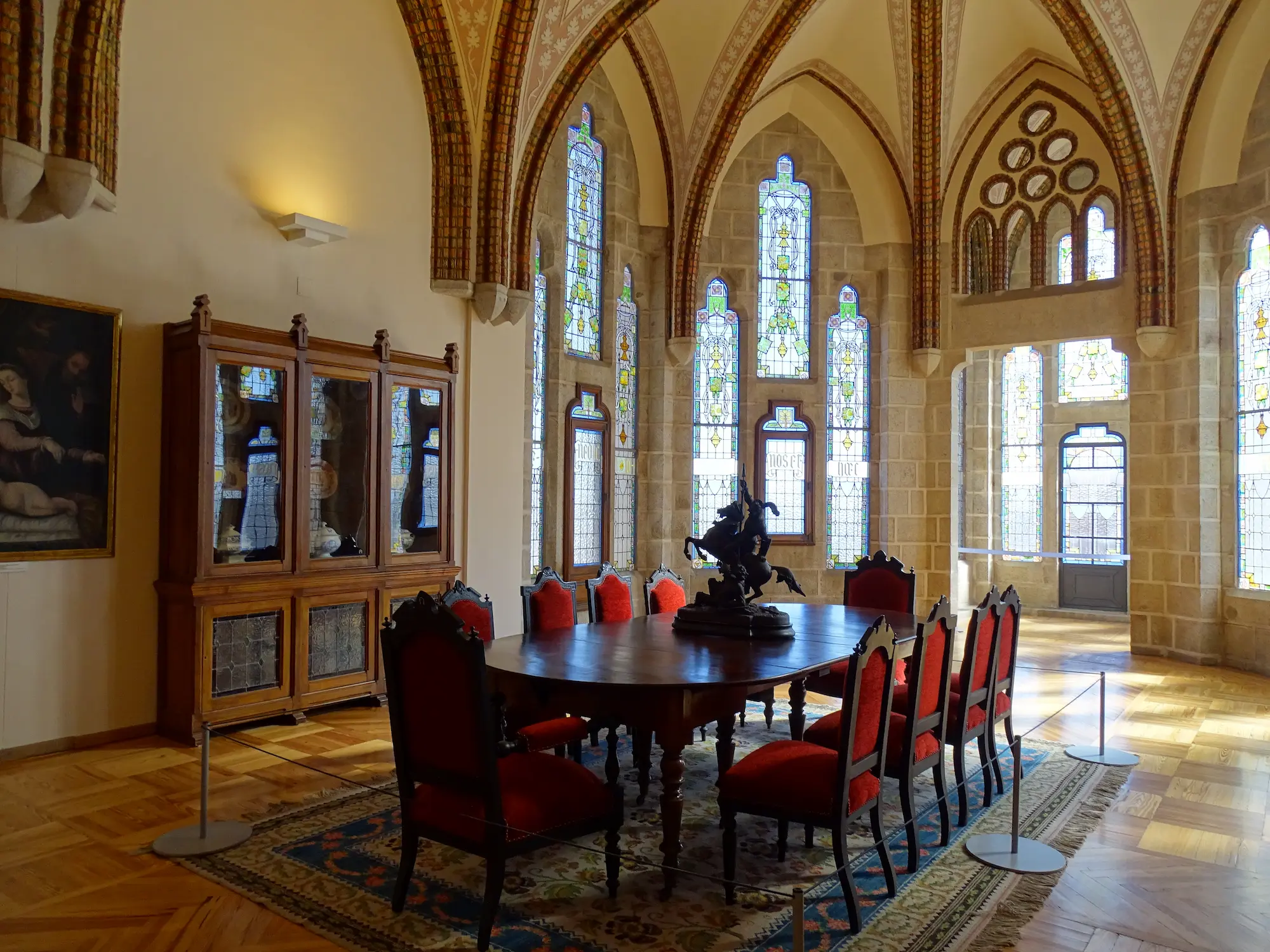
The gala dining room
ROOM 2. THE OTHER ARTISTS
It is important to vindicate the presence of other artists who gave completion to the work of the Palace and who meant for Astorga a truly important focus of artistic activity.
Ricardo García Guereta completed the work on the Palace in 1913.
Juan Moya carried out the design of many of the finishing touches of the complex.
As for the interior decoration of the building, artists such as the sculptor Enrique Marín Higuero or the painter Fernando de Villodaswith works of elegant models with historicist touches.
Daniel Zuloaga in charge of the neo-Renaissance ceramics of the chapel and the beautiful stained glass windows made by the Maumejean factory.
And along with these works others of a more artisanal nature such as the ceramics of Jiménez de Jamúz.
And the large zinc angels with episcopal symbols designed by Gaudí, made by the Royal Asturian Mining Company.
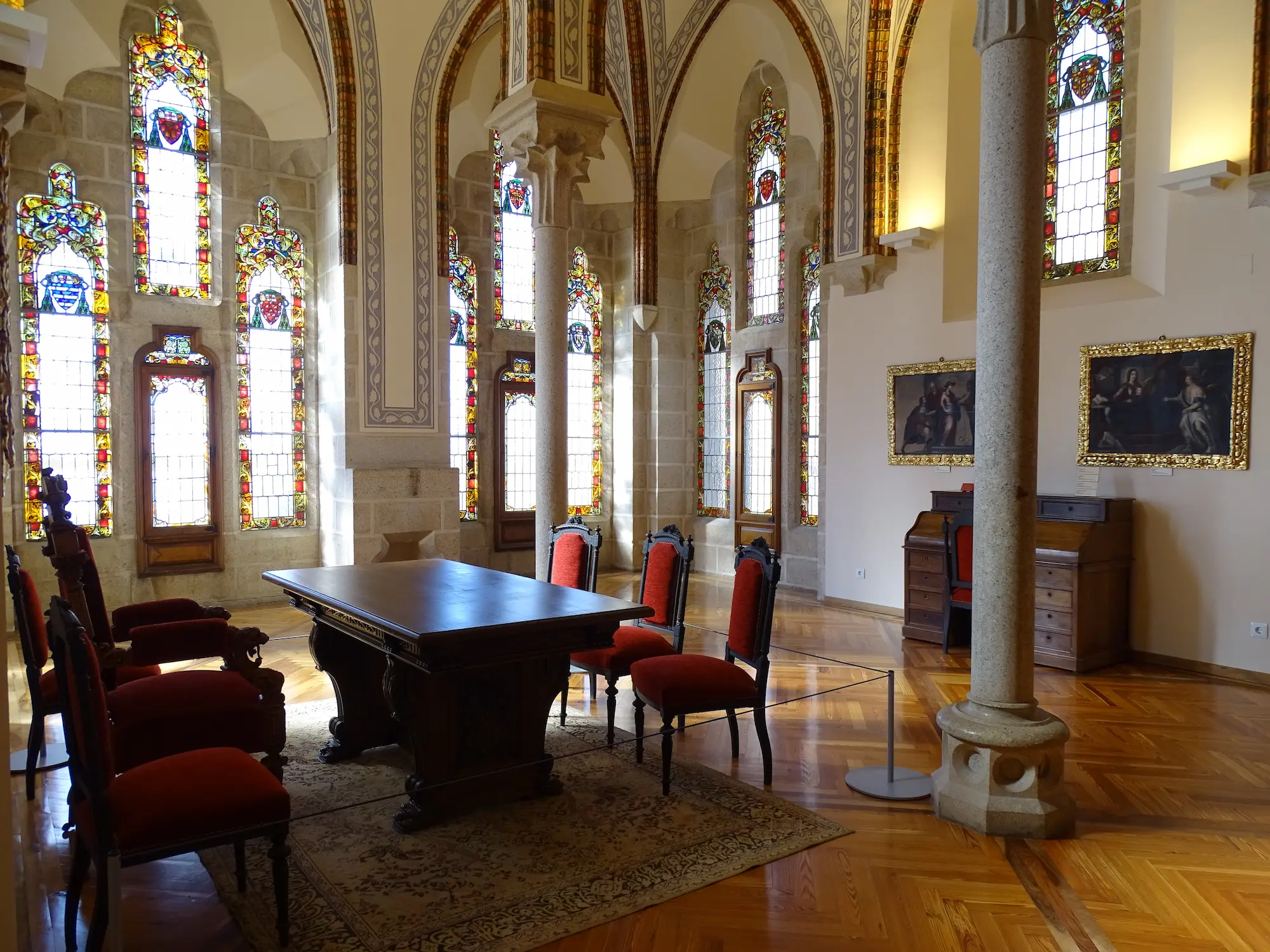
Office
ROOM 3. THE MUSEUM FROM ITS ORIGINS
The Palace was never used as a house and its museum intentions had their origins a long time ago and even coinciding with the promoter of the building. Later the Epigraphic Museum was installed in the basement and finally during the episcopate of Don Marcelo González Martín the Museum of the Roads became a reality and opened its doors to the public in 1964.
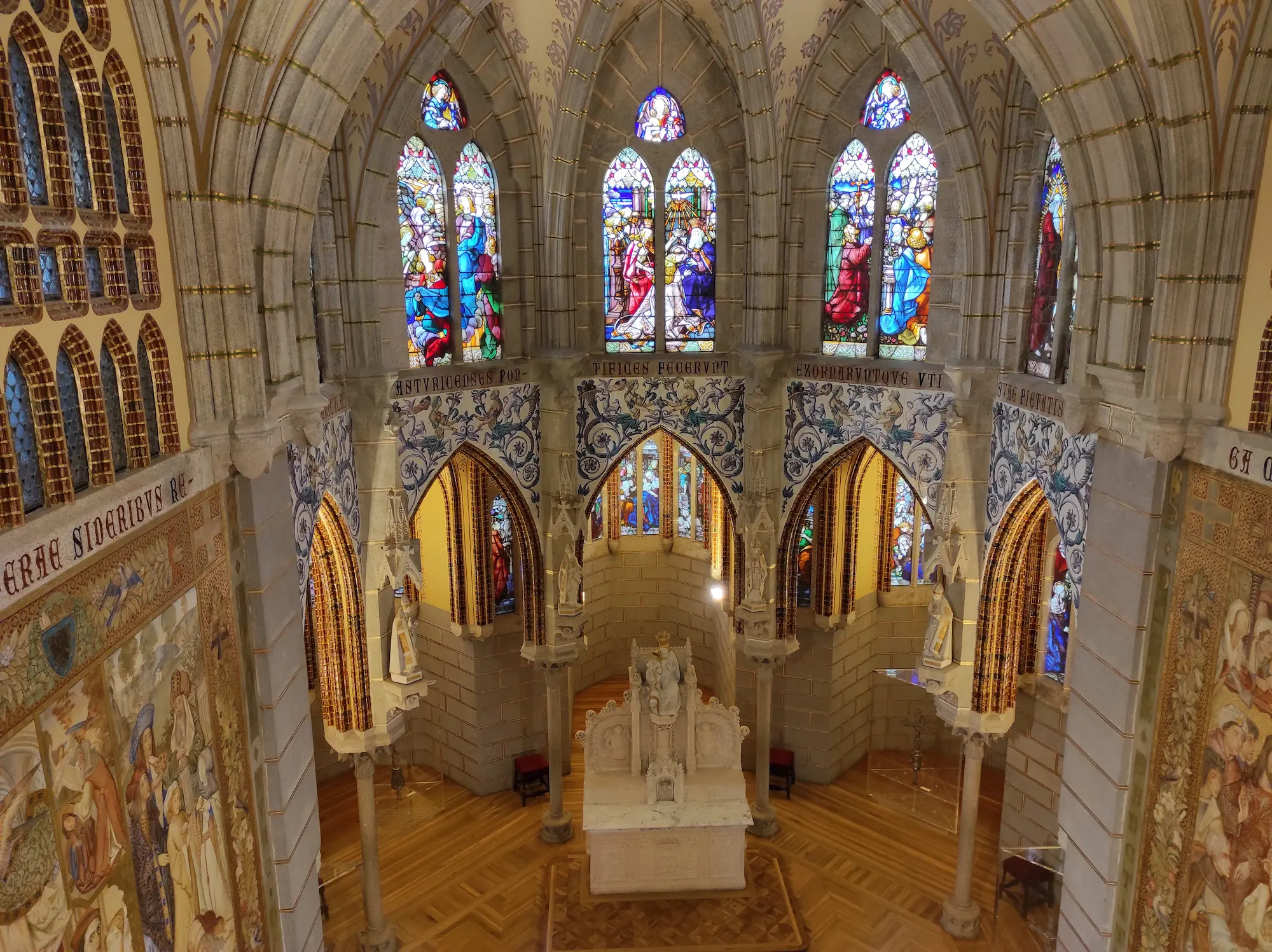
Chapel
At the heart of the Palace is one of its most unique and, perhaps, most silent spaces: the chapel. Conceived by Gaudí as a place of recollection, this small oratory condenses, on an intimate scale, many of the ideas that run throughout the building.
The light, always measured, filters softly and models the stone, generating a serene atmosphere in which architecture and spirituality are intertwined. The chapel was consecrated in 1913, in an act that marked one of the only moments of liturgical use of the Palace.
Beyond its size, this space summarizes a way of understanding architecture as an experience: not only as a construction, but also as a place for contemplation.