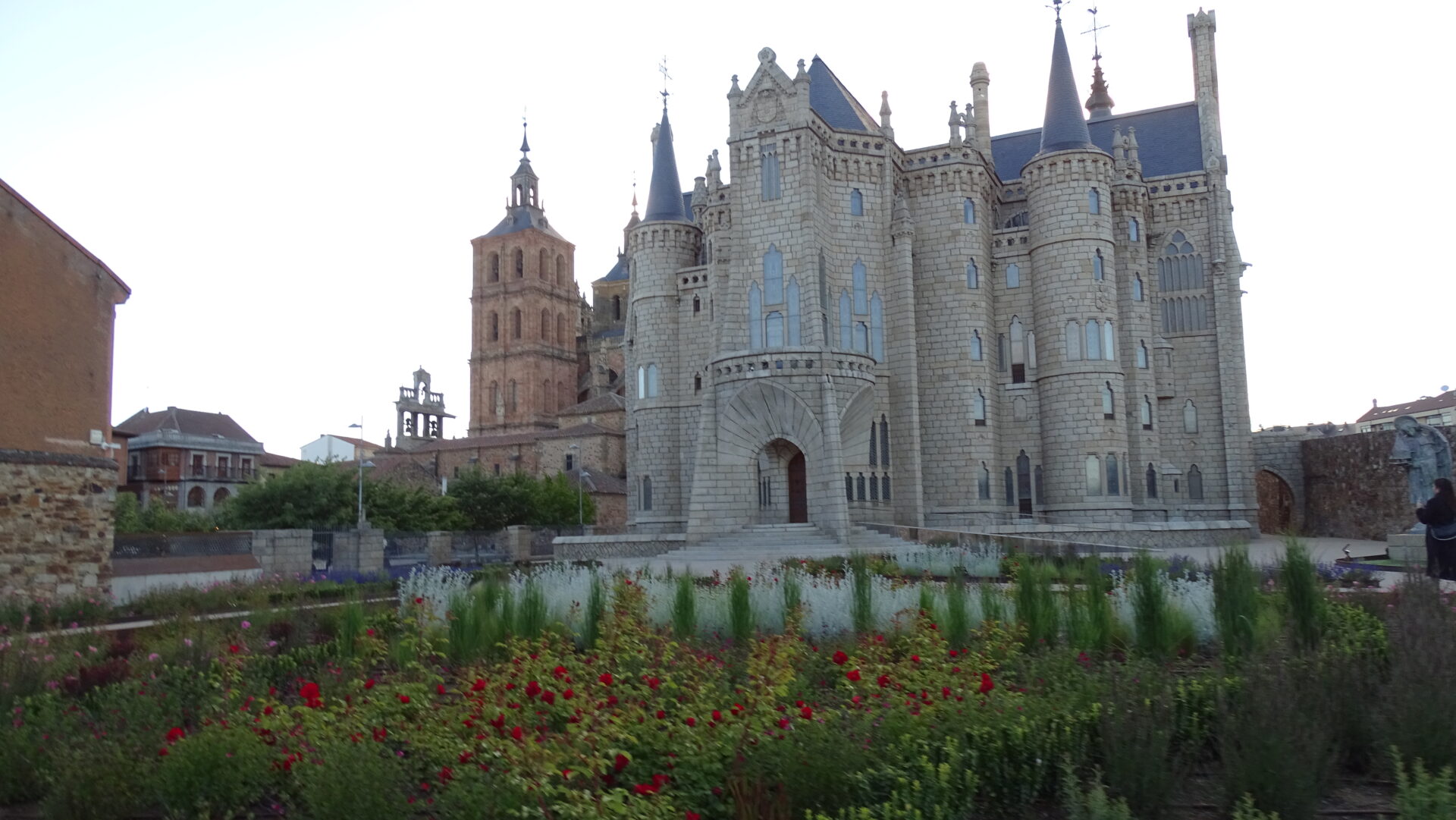
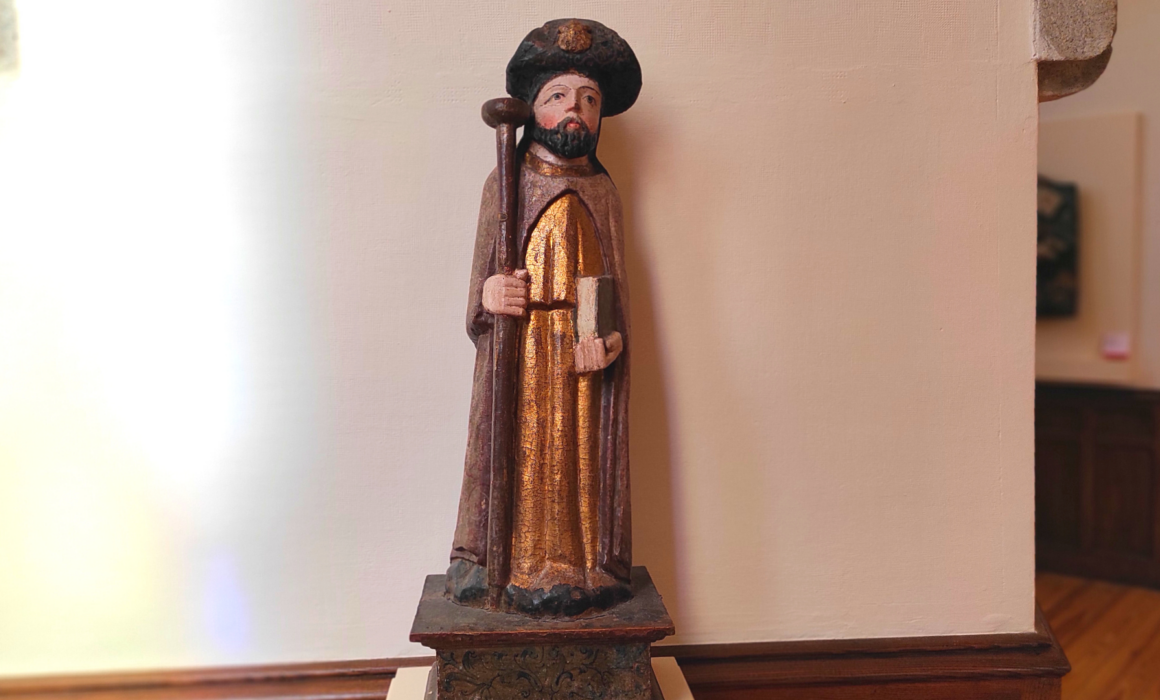
The Museum of the Ways of the Gaudí Palace proposes a 13th century sculpture as September’s Piece of the Month. On the occasion of the Compostelan Holy Year, this year the Museum offers each month a piece of the Jacobean tradition of the Diocese of Astorga, pieces exposed in the Provisorato, the room dedicated to the phenomenon of pilgrimage. On this occasion the piece comes from the locality of Quintana de Fon (municipality of Villamejil), in which the apostle Santiago is represented as a pilgrim.
It is the oldest original sculpture of this iconography preserved in the Museo de los Caminos, so it is an important piece among those exhibited in the santiaguista exhibition. It is a work of popular invoice with a very schematic and rigid formal resolution, both in the anatomical treatment (face and hands), as well as in the clothing. The sculpture wears a tunic, a cloak, a wide-brimmed hat with a carved veil on the front and on the powerful staff held in his right hand.
These are the elements that characterize this representation of St. James the Greater as a pilgrim, but he also carries in his left hand a closed book that shows the apostle as a disseminator and defender of the Word, recalling his evangelical mission.
The sculpture can be dated to the 13th century, a time when the French Route to Santiago de Compostela flourished with intensity, after the publication of the Codex Calixtinus in the 12th century, and economic and artistic activity took hold. These activities definitively developed iconographic models such as those of this diocesan piece, full of simple popular charm, which is exhibited in the central apse of the Provisional of the Gaudí Palace.
The monument is open every day in the morning and afternoon. From October it will be open from Monday to Friday from 10:30 am to 2:00 pm and from 4:00 pm to 6:30 pm.