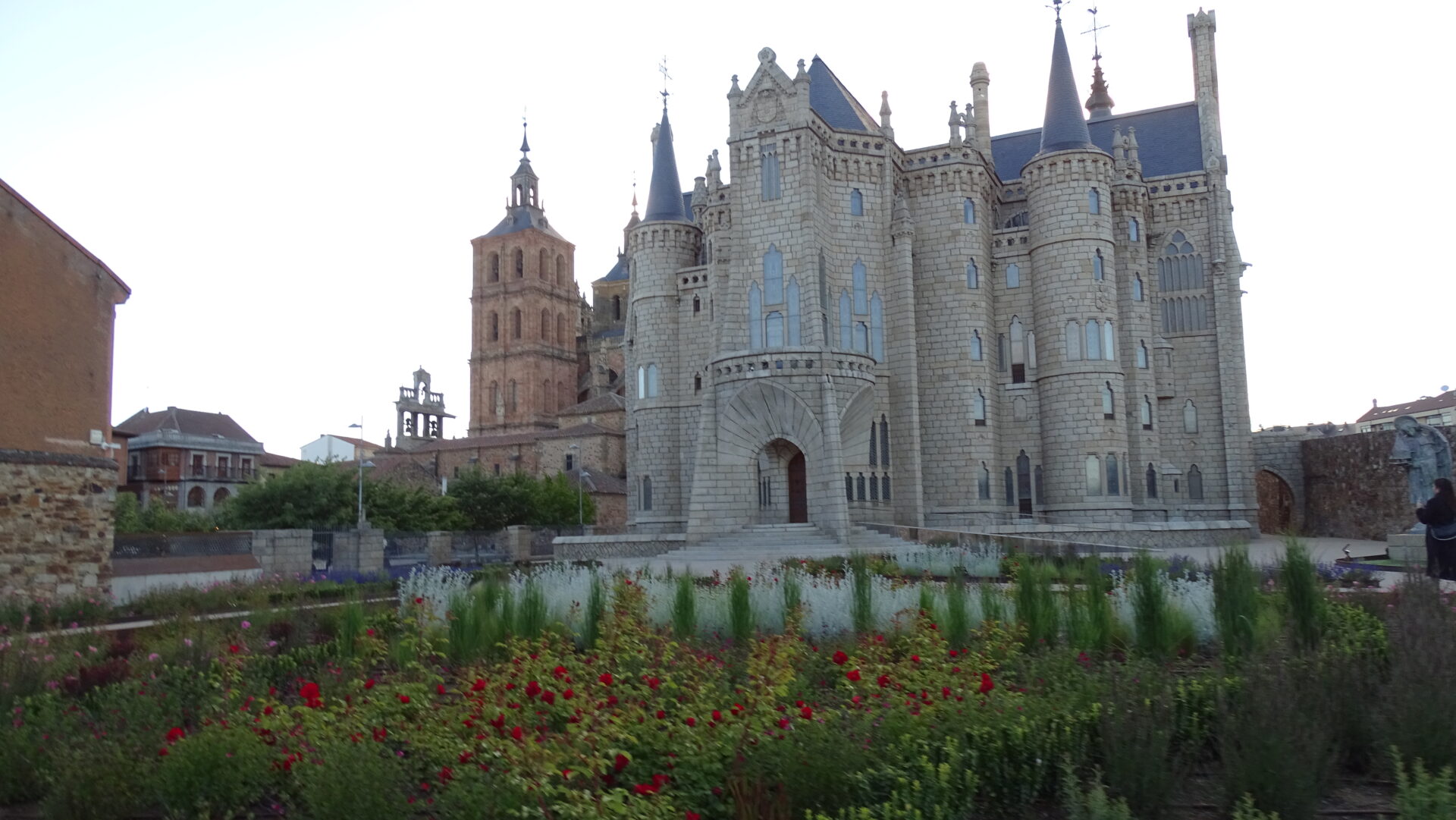
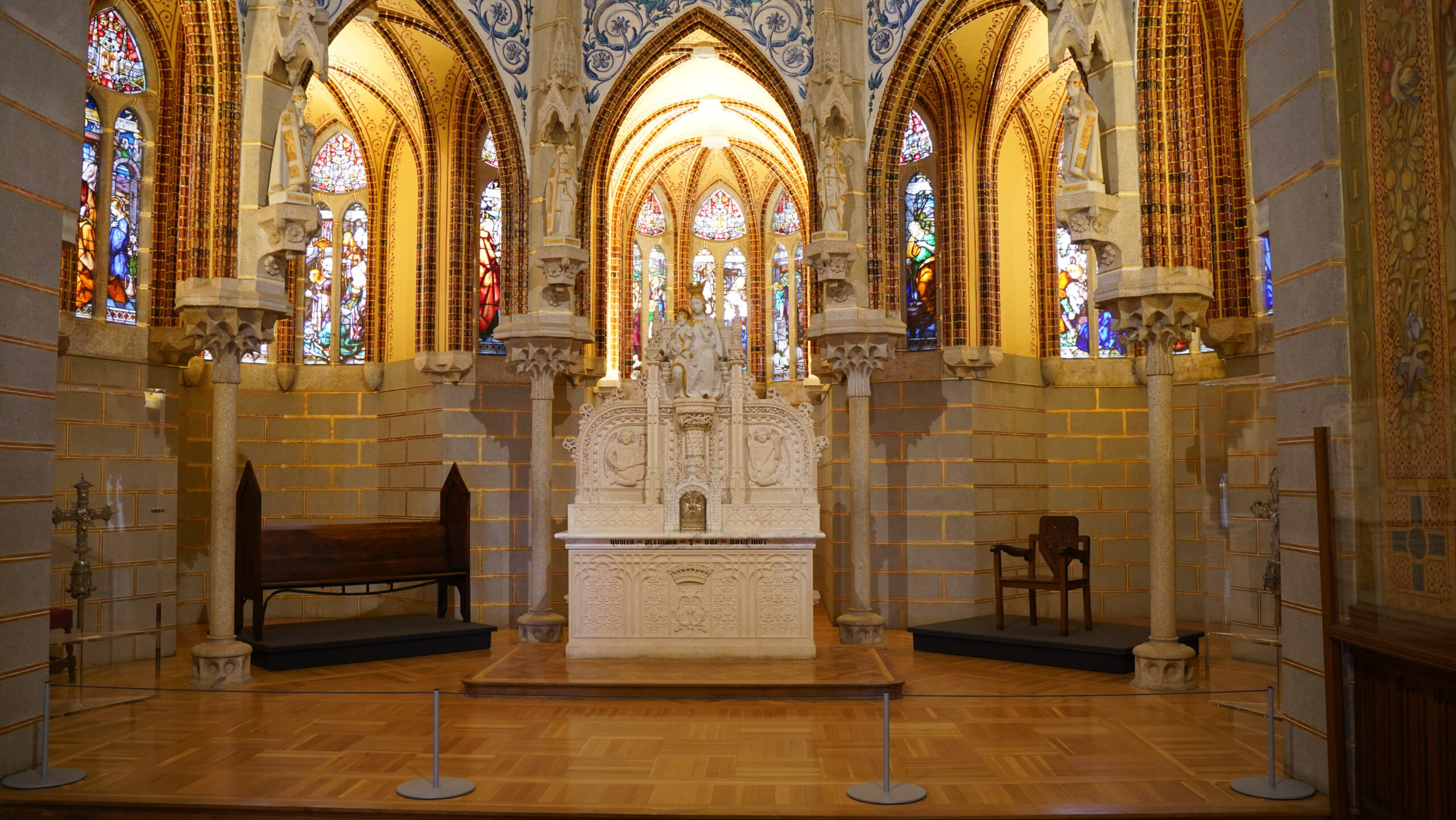
The Gaudí Palace incorporates into its temporary exhibition “The Piece of the Month” two unique pieces that allow visitors to delve into one of the most refined facets of Antonio Gaudí’s creative genius: furniture design. They are a bench (1942, replica of an original from 1898) and a presbytery chair (1943, replica of an original from 1898), both from the Basilica of the Sagrada Familia.
Made of wood -chestnut and iron in the case of the bench-, these pieces reflect the integral conception of architecture that Gaudí defended. For the architect, the furniture was not an accessory element, but a natural extension of the architectural space, conceived with the same structural, symbolic and aesthetic rigor.
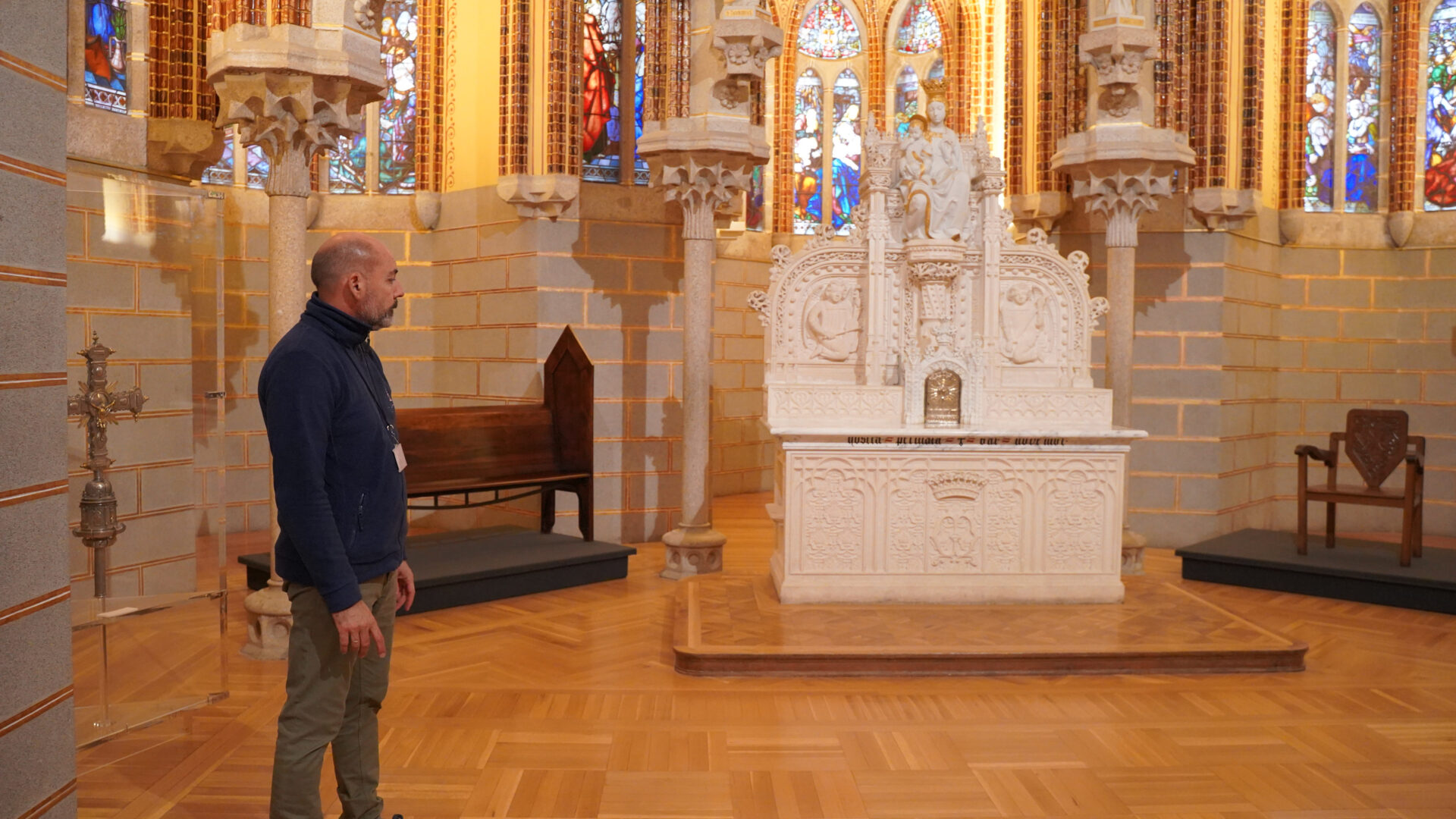
Wood, an essential material in his work, was used by Gaudí both in constructive solutions and in the design of objects, thanks to his profound knowledge of its qualities. A team of highly skilled craftsmen played a fundamental role in this creative process, among them the cabinetmaker Joan Munné i Seraní (1861-1938), a close collaborator of the architect and author of the original models of these pieces. He was transferred by Gaudí from Catalonia to act as master carpenter in Astorga and one of the directors of the crews during the architect’s prolonged absences. He also made the wood and brass molds designed by Gaudí for the flattened bricks of Jiménez de Jamuz that were used to decorate the ribs of the vaults.
The bench, with straight lines and raised sides with pointed tops, incorporates an iron structure that reinforces its solidity, maintaining formal coherence with other benches designed for the crypt. For its part, the presbyterial chair, intended for the officiants accompanying the bishop, has armrests and a pentagonal back, richly ornamented with the names of Joseph, Mary and Jesus, as well as the chrism flanked by the alpha and omega.
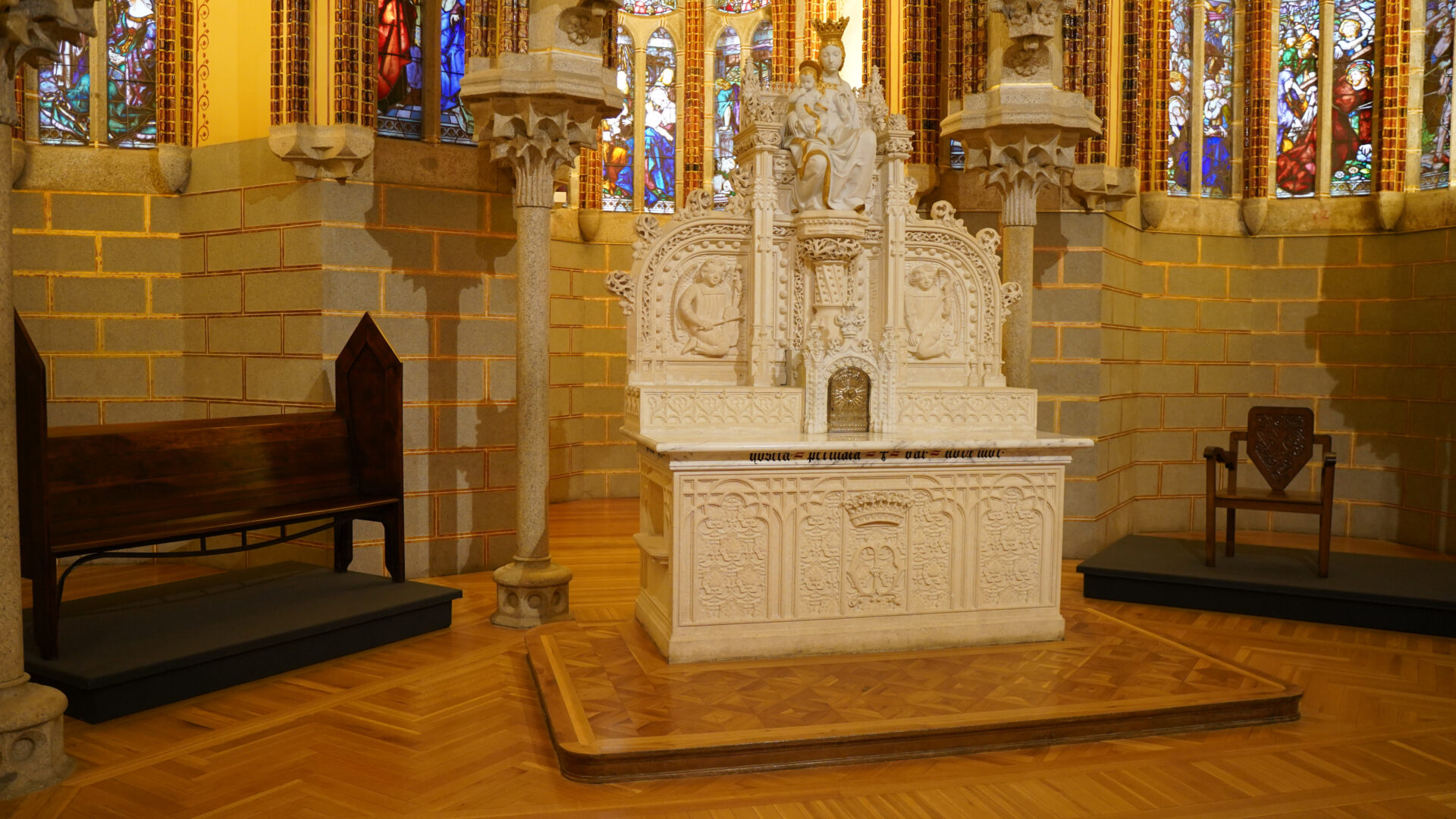
Both pieces were part of the liturgical furniture conceived for the crypt of the Sagrada Familia, the origin of Gaudí’s ambitious basilica project. They combine functionality and symbolism, strengthening the link between liturgical practice and artistic expression.
With this addition, the Gaudí Palace continues to deepen the understanding of the creative universe in the centenary of Gaudí’s death, offering visitors a more complete look at his total conception of art and architecture.