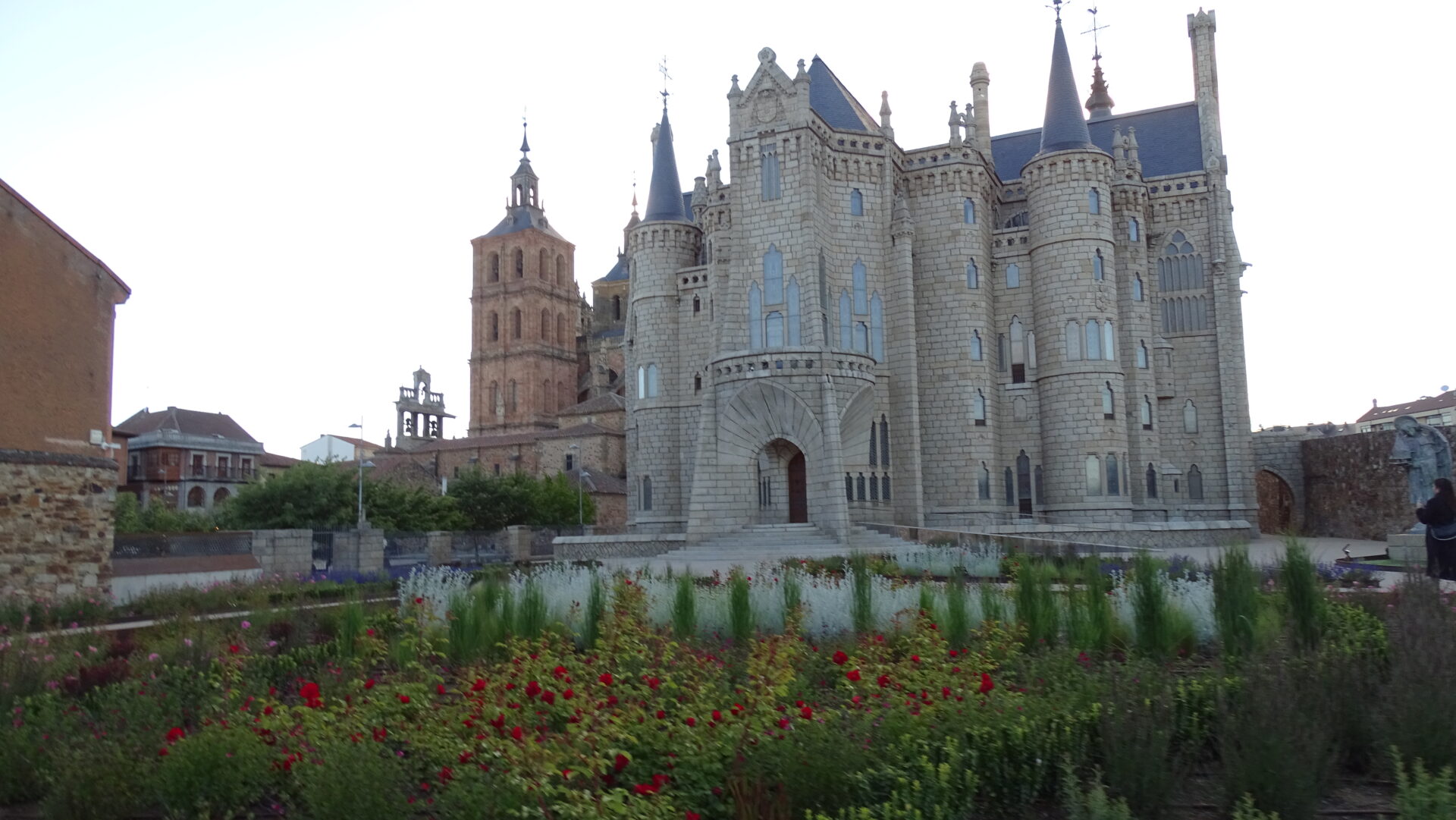
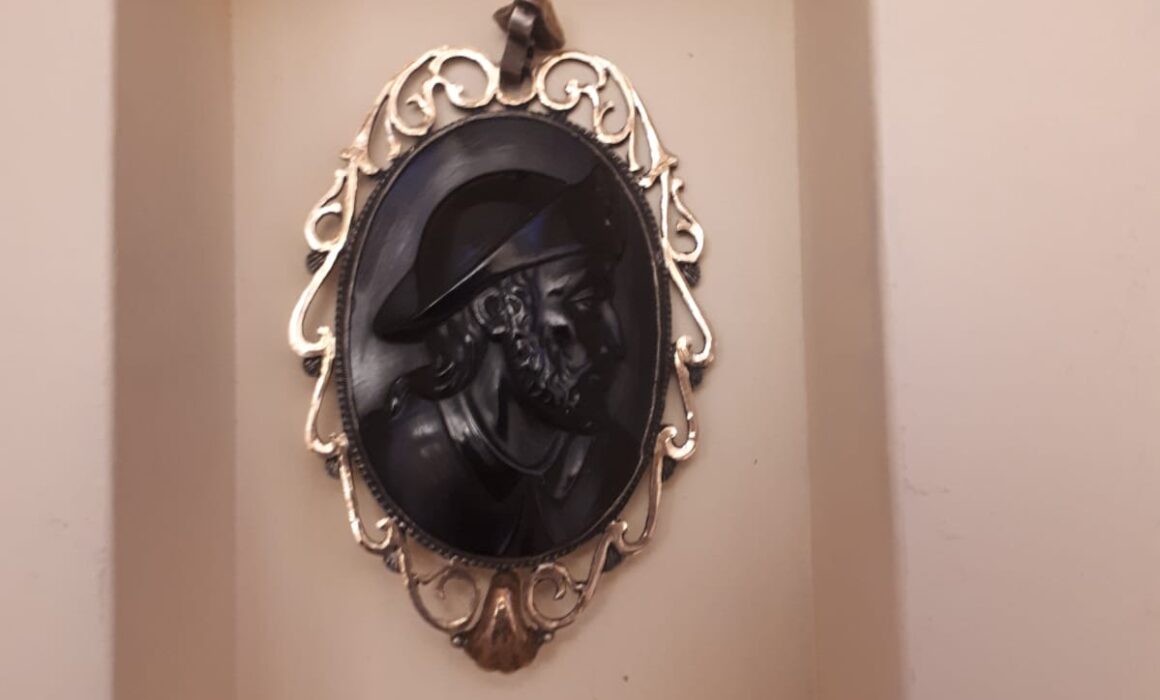
This 2021, Jacobean Holy Year, the museum presents each month a work belonging to the Jacobean tradition within the Diocese of Astorga. The Museum of the Ways of the Palace of Gaudí proposes as the piece of the month of November a medallion that offers an effigy of Santiago Peregrino.
The medallion, of unknown provenance, is a good example of the traditional jet stone craftsmanship that became, along with silver work, the most successful among pilgrims to Compostela in the golden centuries of the Jacobean route – mainly from its beginnings until the 17th century.
The small piece presents the effigy of the Apostle with some of the most represented iconographic symbols. He appears with a wide-brimmed hat and a carved scallop on the front, a cape and a bearded face, as well as long, fine hair falling over his shoulder. The piece, oval, is worn in a very fine sogueado and a work in golden metal that embellishes it. At the top and bottom of the medallion, it is topped with two small scallops, the first one being the one that allows to turn it into a pendant.
The carving of jet in workshops in Santiago de Compostela is justified by the devotion to St. James and its importance in religious, economic and artistic aspects. It is a fragile, hard, compact and black fossil material that accepts a polishing with which it acquires an intense shine and a soft touch.
In the 14th century, the guild activity of these masters is already documented and they generated a great profusion of all kinds of pieces and amulets for the memory of the pilgrims who went to the tomb of the apostle Santiago. In 1410 the Cofradía de Maestros Azabacheros Compostelanos was created, living its period of greatest splendor until the end of the 16th century. From then on it began its slow decline, although this craft is still alive, rooted in the birth of the pilgrimage to Santiago.
This 16th century medallion is displayed in the Provisorato room, dedicated in the museum to the pieces of iconography of Santiago de Compostela. It can be visited, as well as the Gaudí Palace, every day from 10:30 am to 2:00 pm in the mornings and from 4:00 pm to 6:30 pm in the afternoons.