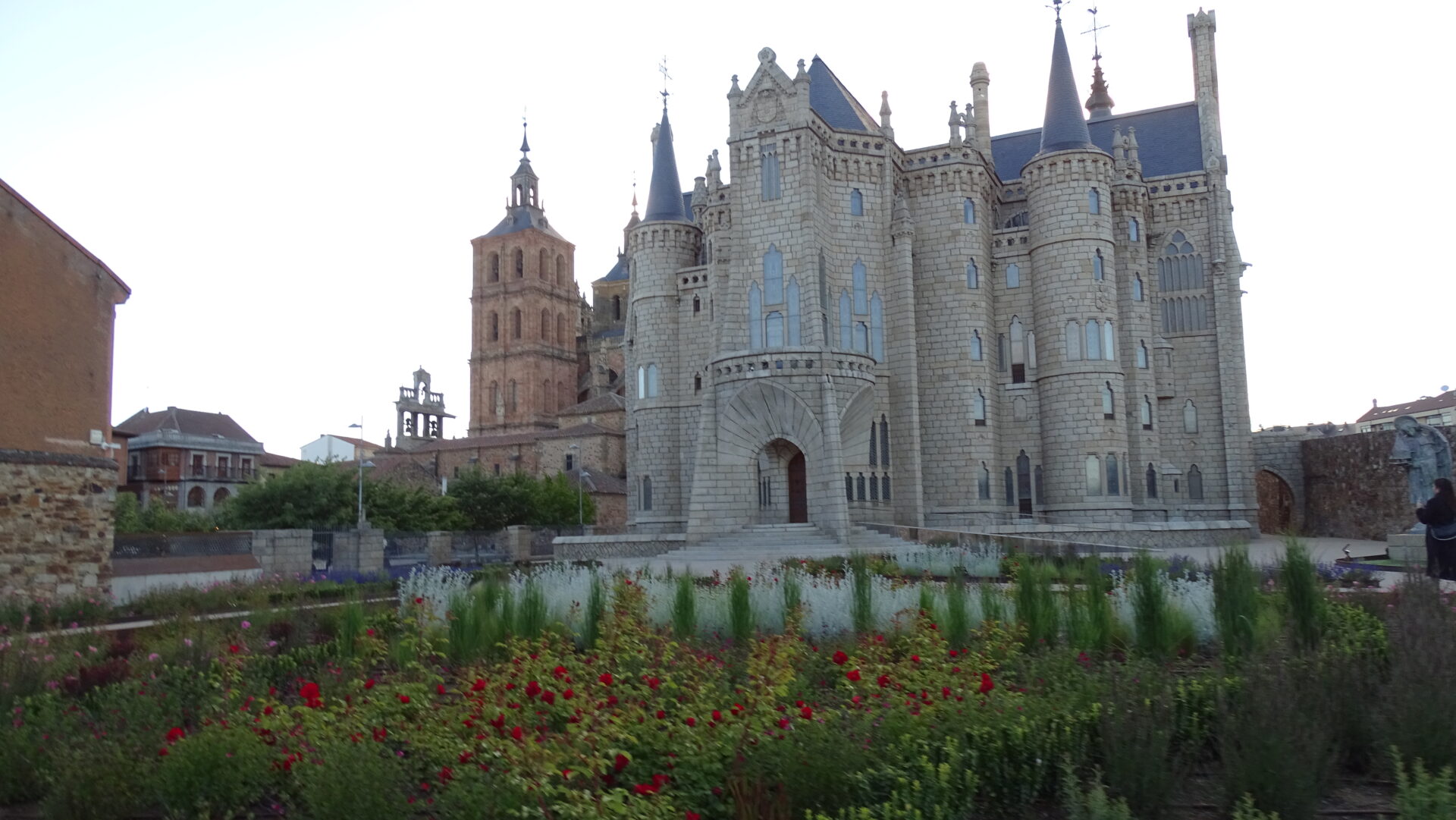
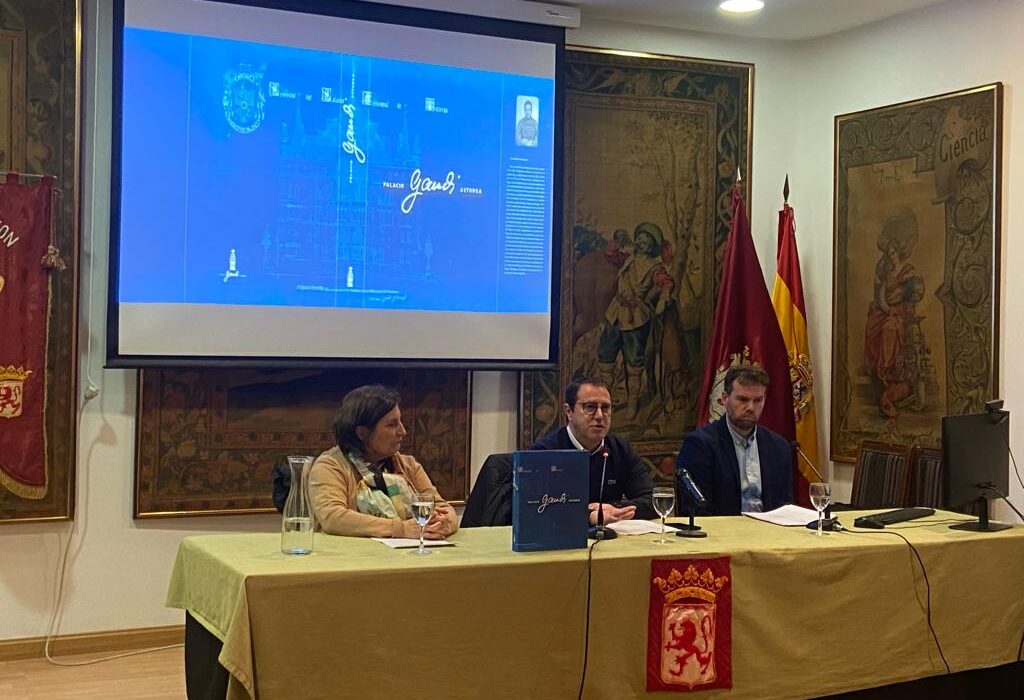
The Casa de León in Madrid hosted this Thursday afternoon the presentation of the book “Palacio Gaudí Astorga”, by Jairo Álvarez, a work fruit of years of research on the Episcopal Palace of Astorga, the most extensive and complete work of research dedicated to the Astorga monument, one of the three buildings designed by Antoni Gaudí outside Catalonia.
The event, which was attended by Margarita Álvarez, as liaison with the Casa, and Víctor Murias, director of the Gaudí Palace, brought together a good number of people interested in discovering unknown facts about the Gaudí Palace from the author of the book. Murias shared his perspectives on the importance of preserving the architectural heritage and highlighted the relevance of the book to shed light on the lesser known details of the collaboration between Gaudí and Bishop Grau i Vallespinós in the creation of this architectural jewel and pointed out the importance of the monument as one of the “best” ambassadors to make the province of León known to the world, “it is a great luck to have in our province two unique international brands that do not exist at the same time in any other place in the world, which are Gaudí and the Camino de Santiago”.
The book covers, through its 600 pages, the most complete history of the Astorga monument with unpublished photographs and very well documented. “Palacio Gaudí Astorga” came out last October 12, 2023, on the 110th anniversary of the completion of the works of the building. “The book has been done with all the love, care and dedication. I am personally very happy with the work and I hope it will also be to the liking of all of you,” Murias pointed out.

Jairo Álvarez, author of the book “Palacio Gaudí Astorga,” offered an intimate view of the research process behind the work and shared fascinating anecdotes discovered during the creation of the book. He unpacked the work of four years of research. “Continuing the work of our predecessors in the study of the Palace, especially María Jesús Alonso Gavela, and handling all the bibliography, we realized that the Palace, polyhedral, offers diverse readings. Among all of them, we have selected three, which correspond to the parts of this book. The first is the historical-constructive reading of the Bishopric; the second is the artistic and symbolic-spiritual reading; and, finally, the biographical reading, where we will focus on the ‘makers’ of the Episcopal residence”.