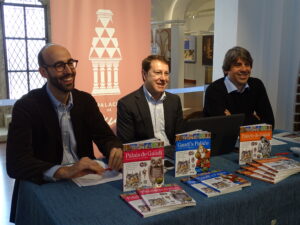
The Gaudí Palace in Astorga presents the first visual guide to the monument designed by Gaudí in three languages. The publishing house Dosde has been commissioned to carry out this work, the first of its kind that speaks exclusively of the Palace of Astorga.
It will be available at a price of 12.95 euros at the Palace store and on the publisher’s website. A document that “will help in a very didactic way to tour the Gaudí Palace and explain it,” said the director, Victor Murias Borrajo, at a press conference with the director of publishing Carlos Giordano and Daniel Rodriguez, director of content.
Why did Gaudí get involved in the construction of the palace? What difficulties did the architect face? Who completed the project? What symbolism does the design of the building hold? The new book answers these questions and many others through its pages, offering an exhaustive and entertaining vision of Astorga’s most admired monument.
Each of the guides is designed to be a simple and very visual tour through Gaudí’s Palace. A total of 2,200 copies have been printed in the first print run, 1,200 in Spanish, 500 in English and 500 in French. In addition, the guide includes exclusive digital content that can only be accessed with the purchase of a physical copy.
With this new format, the Palace seeks to facilitate access to and understanding of the monument designed by Antonio Gaudí, which served as a precursor of ideas for the architectural designs that would later form part of his legacy. The book, moreover, is made with environmentally friendly paper and is intended for both adults and children thanks to its full-color images.
A unique perspective in three languages
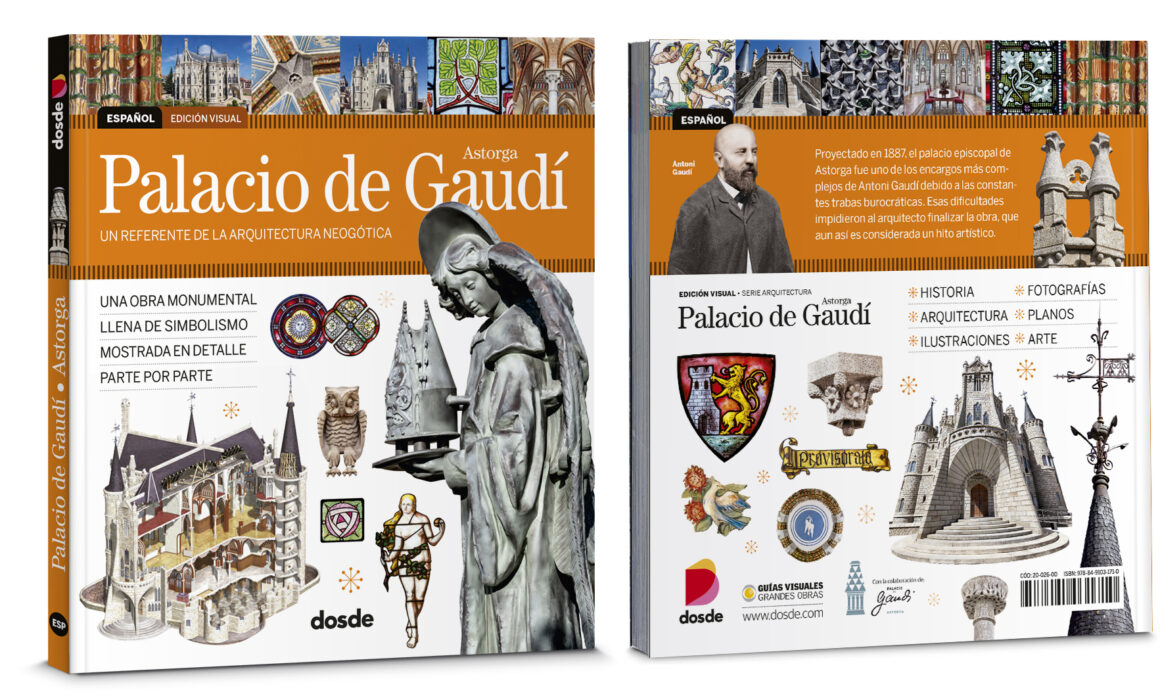
Available in Spanish, English and French, the 96-page book Palacio de Gaudí – Astorga brings together more than 200 images, which are combined with concise and rigorous texts to analyze all aspects related to this masterpiece by Antoni Gaudí: from the origins of the project to the internal configuration of the palace, including the historical evolution of the monument and the symbolic meaning of the different spaces that make up the complex.
Published in the Visual Edition format, the book Palacio de Gaudí – Astorga includes among its images 3D recreations, which allow to approach the monument from a privileged perspective, discovering its architectural peculiarities. The book also has illustrations that delve into aspects such as ceramic decoration, as well as historical images that serve to place the work in context.
A neo-Gothic landmark
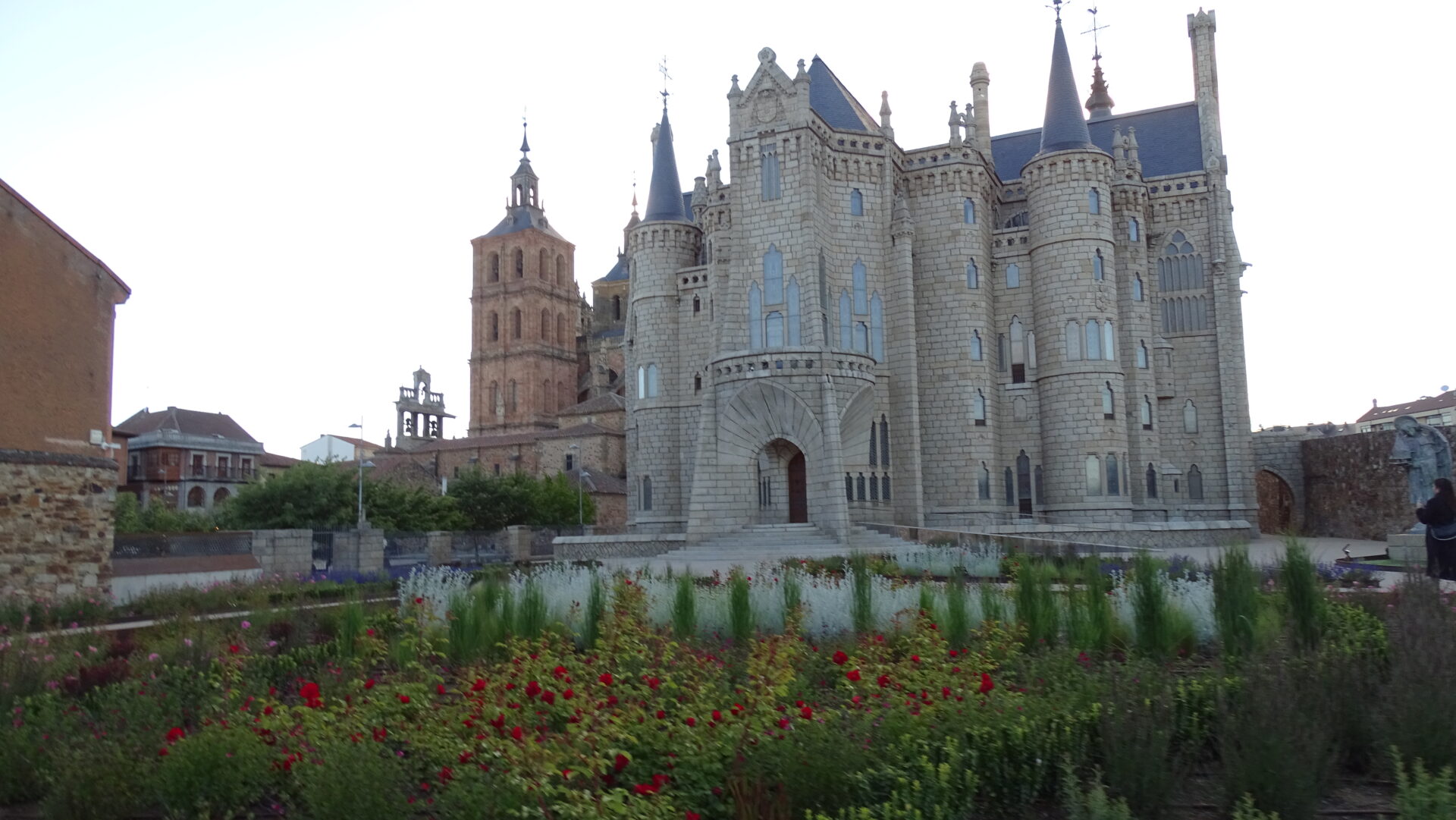
Designed in 1887, the Episcopal Palace of Astorga, also known as Gaudí’s Palace, was one of Antoni Gaudí’s most complex works. The work, an initiative of Bishop Juan Bautista Grau, was marked from the beginning by constant bureaucratic obstacles, to the point that Gaudí was forced to leave the building unfinished. Despite these difficulties, the palace – which would be completed by the architect Ricardo García Guereta – is considered an artistic landmark.
Inspired by Gothic architecture, the palace designed by Gaudí brings together forms typical of the most representative buildings of the medieval world, such as castles and churches. The unique neo-Gothic language that Gaudí applied to the building is also combined with a profound symbolic program designed to emphasize the virtues of episcopal power, which is reflected in a wide variety of decorative details.
Experts in disseminating cultural, artistic and architectural heritage
Founded in 2001, Dosde is a publishing house specialized in the production of books for the cultural and museum sectors, with a strong focus on art and architecture. Among its catalog are several titles dedicated to the life and work of Antoni Gaudí, to which is now added the book Palacio de Gaudí – Astorga.
With an attractive design and published in different formats, Dosde’s books are characterized by showing reality from new and different points of view. The publishing house carries out the whole process of editing, publishing and production, in order to guarantee the excellence of all its editorial developments, oriented to very demanding clients.
Its pages contain dozens of photographs of excellent quality, as well as drawings and 3D illustrations that help to understand this complex building that began its construction on June 24, 1889 and was not completed until October 12, 1913.