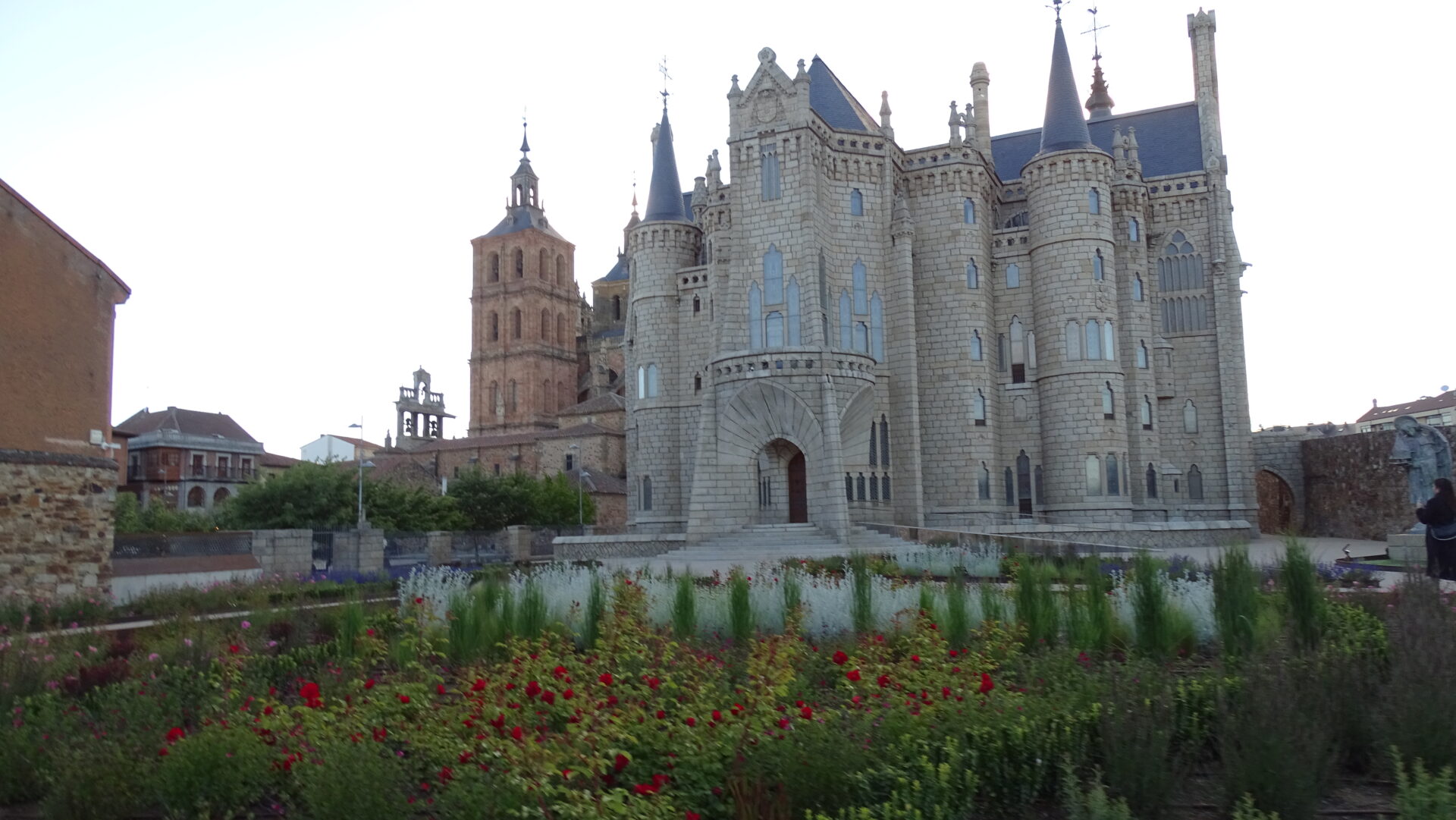

On October 12, 1913 the works of Gaudí’s Episcopal Palace were completed by the Madrid architect Ricardo García Guereta, in the bishopric of Julian de Diego y Alcolea. It was 24 years earlier when the works had begun under the direction of Antonio Gaudí, requested by Bishop Grau, both natives of Reús.
Gaudí conceived a neo-Gothic building within the historicist trend, and to carry it out he relies on three ideas; the idea of castle, temple and stately mansion. In this dwelling would have come to live the Bishop and the entire administration of the Diocese of Asturias. Finally, Bishop Grau died prematurely and due to disagreements with the chapter, the Catalan architect abandoned the works in 1893. It was during the bishopric of Diego y Alcolea when the work was completed by the architect Ricardo García Guereta, who at that time was the diocesan architect of León.
The Mass of consecration of the chapel was not until November 1, 1913 and after this, Alcolea left the diocese of Asturias to take possession of the diocese of Salamanca. Bishop Alcolea was succeeded by Senso Lázaro, a simple, humble man who was no friend of ostentation. Marked by his birth in the bosom of a modest family, after arriving in Astorga and finding this wonderful house, where his predecessor had already inaugurated the beautiful Chapel, he was overcome by the thought of installing his home in the Palace and decided to stay with the modest residence located in the seminary of Astorga. He preferred not to think again about the possibility of living in it, since this was contrary to his deepest and most intimate feelings.
Since 1962, the Palace has housed the Museum of the Roads, created by Bishop Gonzalez Martin.