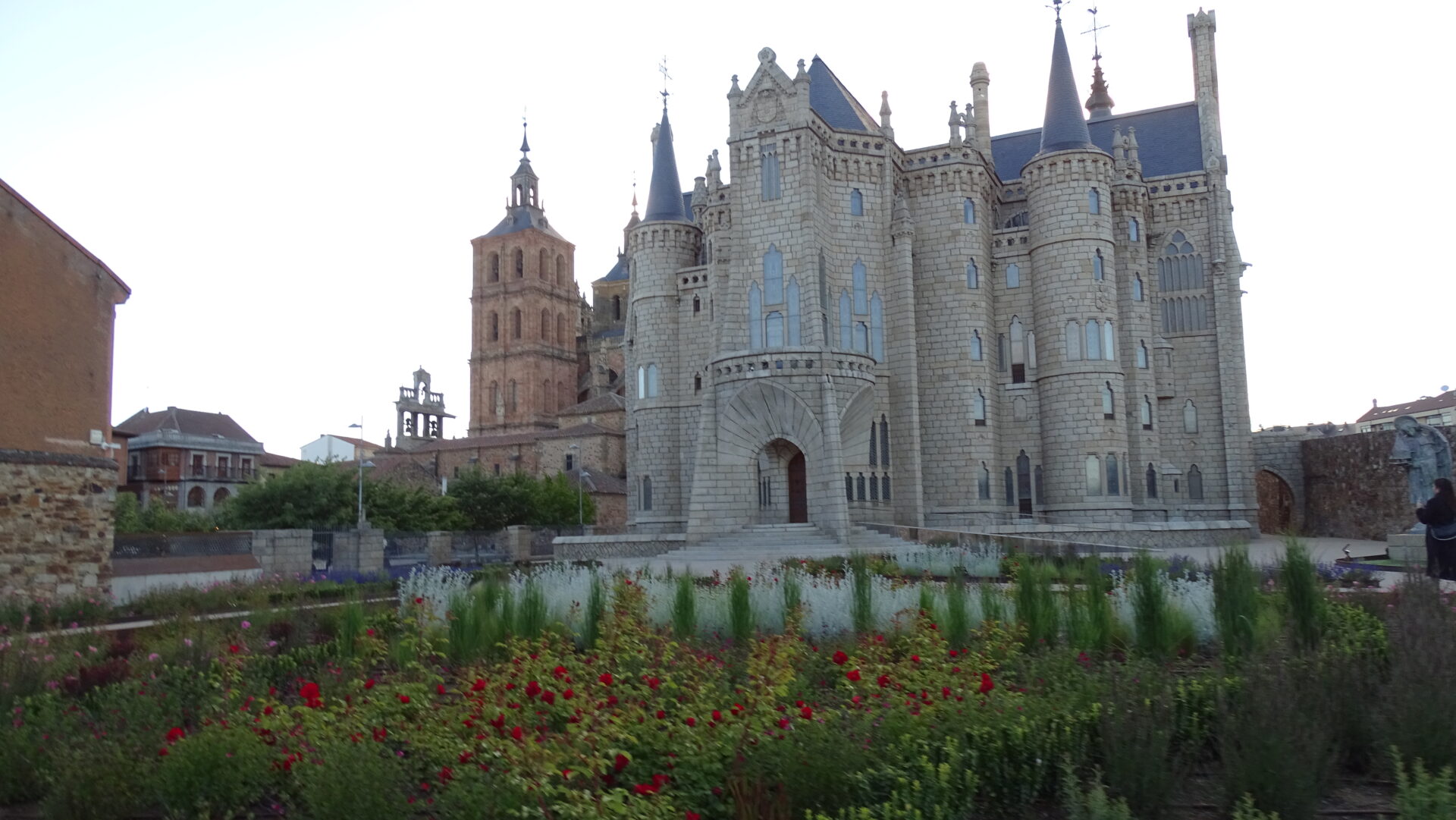
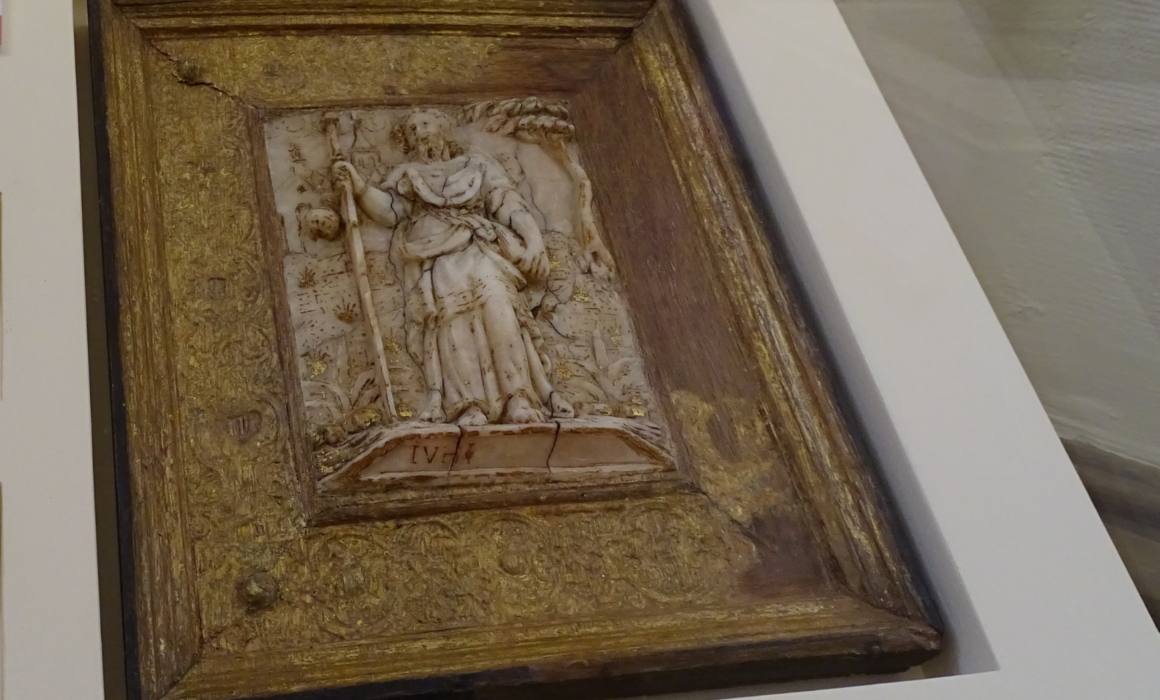
This April, the Gaudí Palace proposes as the piece of the month a small but beautiful alabaster slab that preserves its original frame. It represents the figure of St. James as a pilgrim, iconography that is the common thread of the Provisorato, the room dedicated to the Way of St. James in the Diocese of Astorga.
In this piece, shown in the permanent exhibition, the apostle is represented, with a forceful and bearded physique, with the usual iconographic attributes: staff and pumpkin, hat falling towards his back, wearing a wide and heavy tunic in which the border that embellished it can still be glimpsed. The plate still shows traces of gilding in hair and clothing and the background shows a landscape, schematic and simple, with plant elements and an urban profile behind the hand holding the staff.
This alabaster slab dates from approximately 1600 and comes from the town of Otero de las Dueñas (in the municipality of Carrocera), although it is a Flemish work from the small town of Mechelen.
The Netherlands was commercially proficient and its productions created a series of artistic typologies that made its workshops a reference point. In this way, small wood sculptures and cast bronze works had a great artistic development. The April piece in the Gaudí Palace, made in alabaster, is part of these serial productions that, without standing out formally, were very common in the commercial circuits of the sixteenth and seventeenth centuries. Their initial function as elements that served as small and refined domestic altars meant that they had great momentum and reached all corners of Europe.