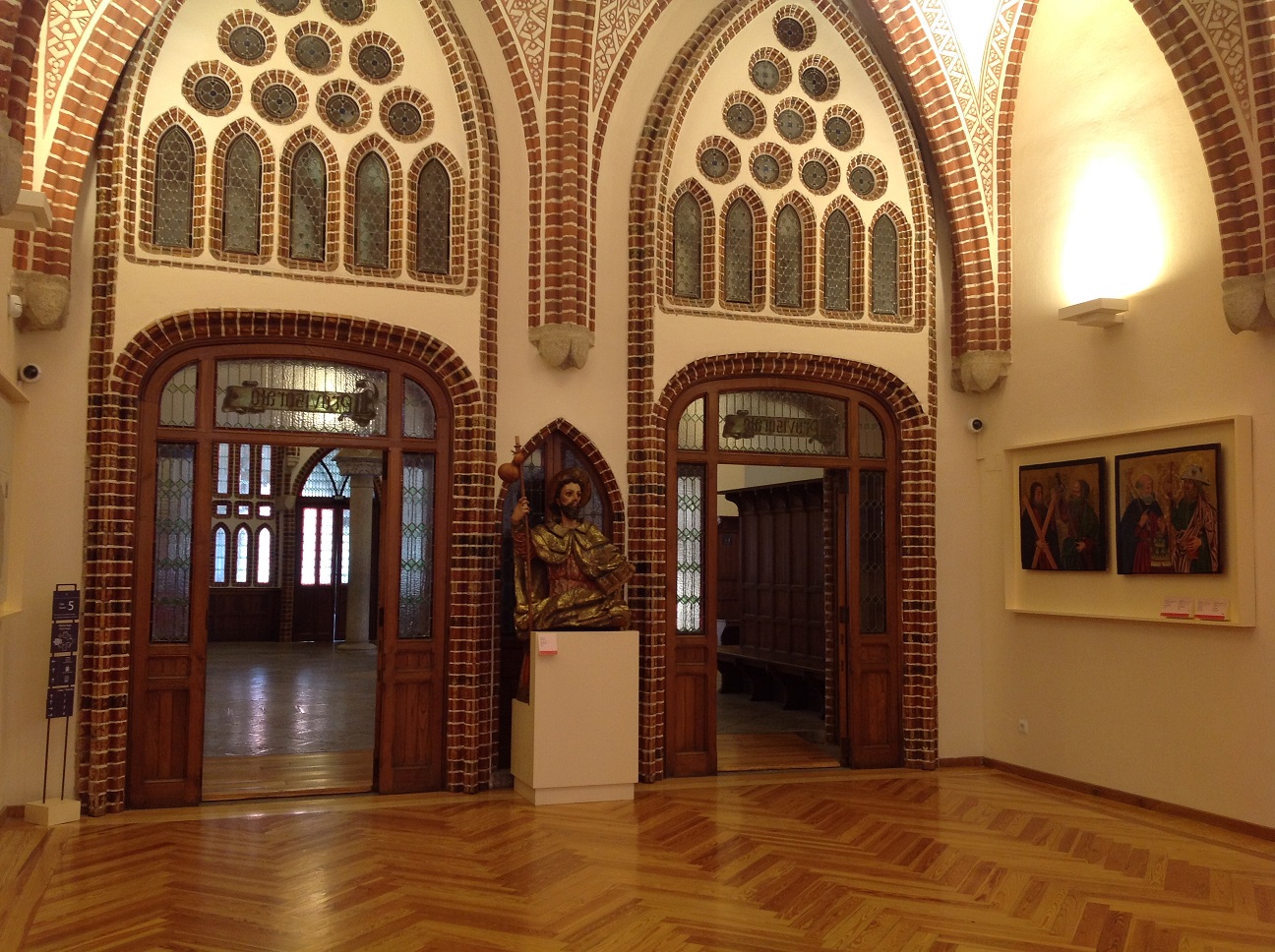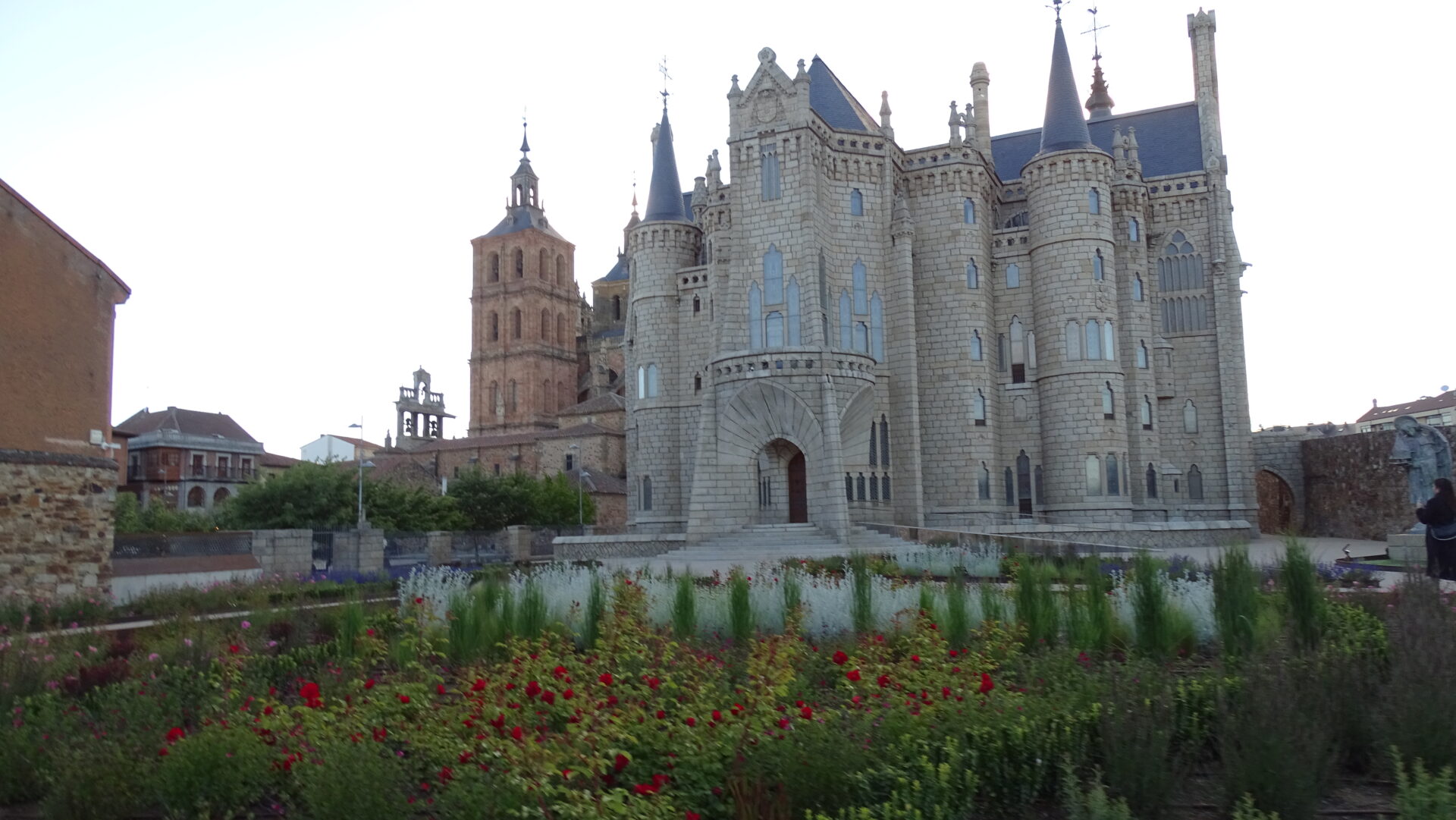
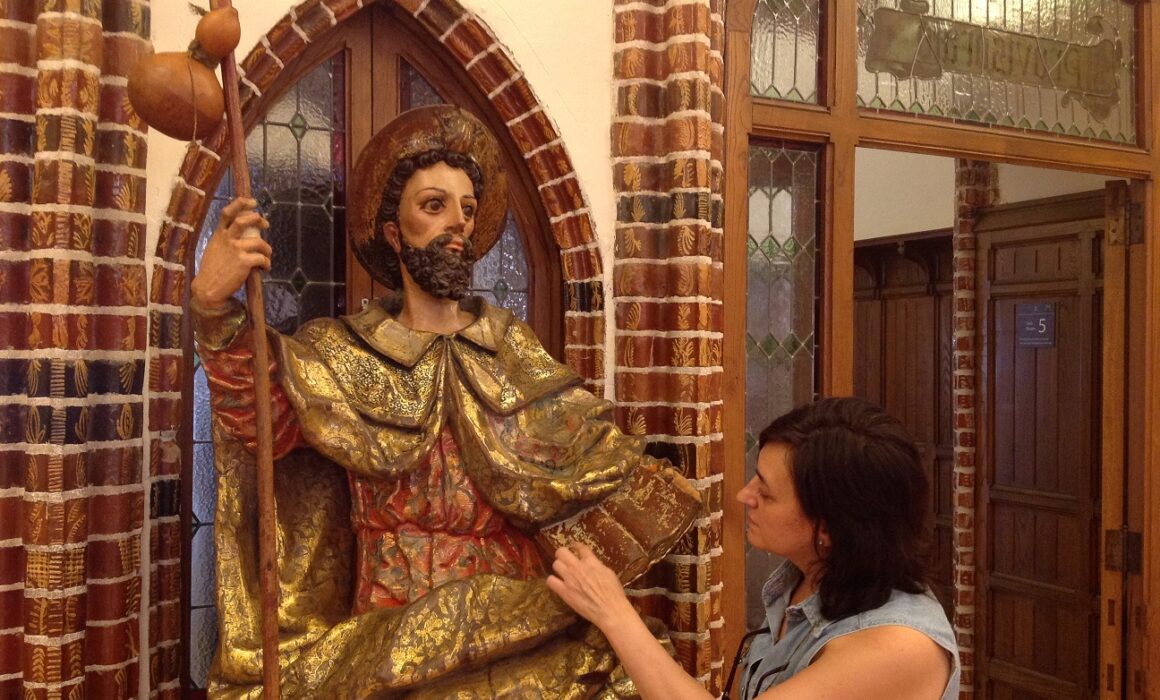
During the restoration of the carving, the team of experts discovered the possible date of the anonymous sculpture from Labaniego (Bierzo region) kept in the room dedicated to the Camino de Santiago in the Gaudí Palace.On the occasion of the celebration of St. James’ Day, the Gaudi Palace wanted to publicize the restoration of a sculpture of St. James the Pilgrim belonging to the Museum of the Ways. A polychrome wood carving dating from the seventeenth century which a discovery during its restoration places it at the end of the century, more specifically in 1694. “During the cleaning process, on one of the pages of the book that Santiago carries in his left hand, some numbers appeared that date, at least, when the polychromy was done. In carvings of this style, normally little time passed between the completion of the sculpture and its polychromy”, explains the restorer Luisa Castillo Vela, director of the process carried out by the Proceso Arte8 team.
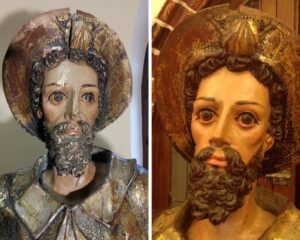
This sculpture presented, apart from the problems derived from the passage of time, cracks of special importance in the head and hands of Santiago, which have been completely repaired and the original splendor of the carving can be appreciated. One of the deepest cracks was in the front part of the sculpture from the hat to the eyebrow, all over the forehead. The team has been in charge of closing the cracks, as well as applying a natural treatment for the conservation of the wood and its preservation from problems such as woodworm.
It had also suffered losses of the original polychromy, as well as dirt in the gilding and parts of the face and hands. “The work represents Santiago seated, but at one point, we don’t know when, the back part was mutilated to possibly fit it in a space that suited them,” explains restorer Lusica Castillo. At present, a custom-made pedestal has been made for Santiago Peregrino, which presides over the Provisorato room, dedicated to the Camino de Santiago.