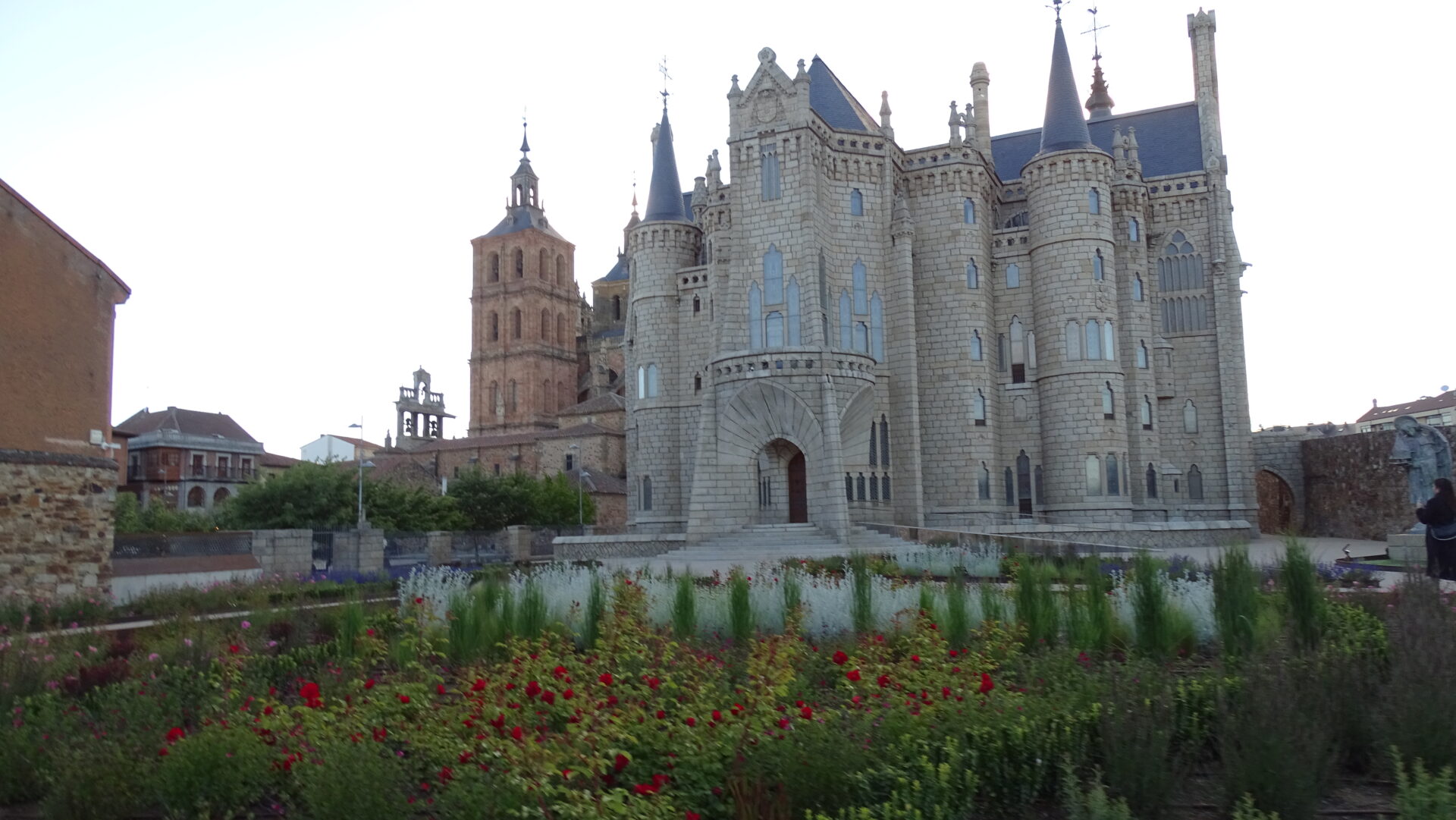
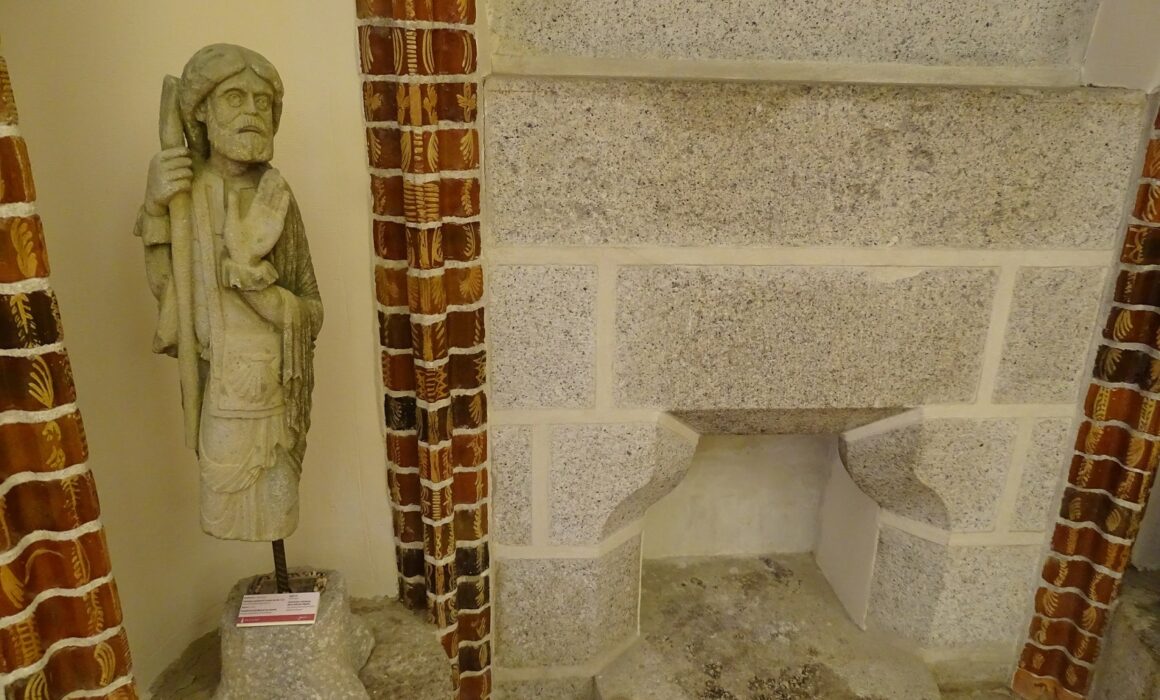
Coinciding with the feast of St. James, the Palace presents every 25th of the month a different piece dedicated to the Santiago phenomenon in the Museum that houses the monument designed by Antonio Gaudí. This month of March, presents a very special stone sculpture. It represents the figure of St. James as a pilgrim and it is a magnificent reproduction in stone of one of the most relevant and symbolic sculptural examples of the heritage of the Diocese of Asturias.
The piece exhibited in the Provisorato of the Palace is a faithful 1:2 scale reproduction, which was made and donated to the Museum by Mr. Nazario Ballesteros Miguélez and was added to the collection in 1998. The piece that inspired Don Nazario comes from the parish church of Santa Marta de Tera, in the province of Zamora, a town with a marked Jacobean tradition as it is the beginning and end of the stage of the Sanabrés Way to Santiago de Compostela.
The piece is embedded in the left spandrel of the arch of the south door of the church. The image of Santiago Peregrino is considered by many to be the oldest representation of the apostle as a pilgrim. It is presented to us with the most classic attributes of iconography: wide tunic, finely carved scarcela to which is attached a scallop shell and showing an image of undoubted strength with the palm of his left hand. The original carving can be dated to the first half of the 12th century.
The existence of such a faithful copy of this symbolic sculpture completes the vision that the Museum of the Ways offers of the artistic side of the Jacobean route developed for centuries in the Diocese of Astorga. The piece is escorting one of the most characteristic elements of the Palace, a handcrafted chimney designed in white granite from El Bierzo by the architect Antonio Gaudí.