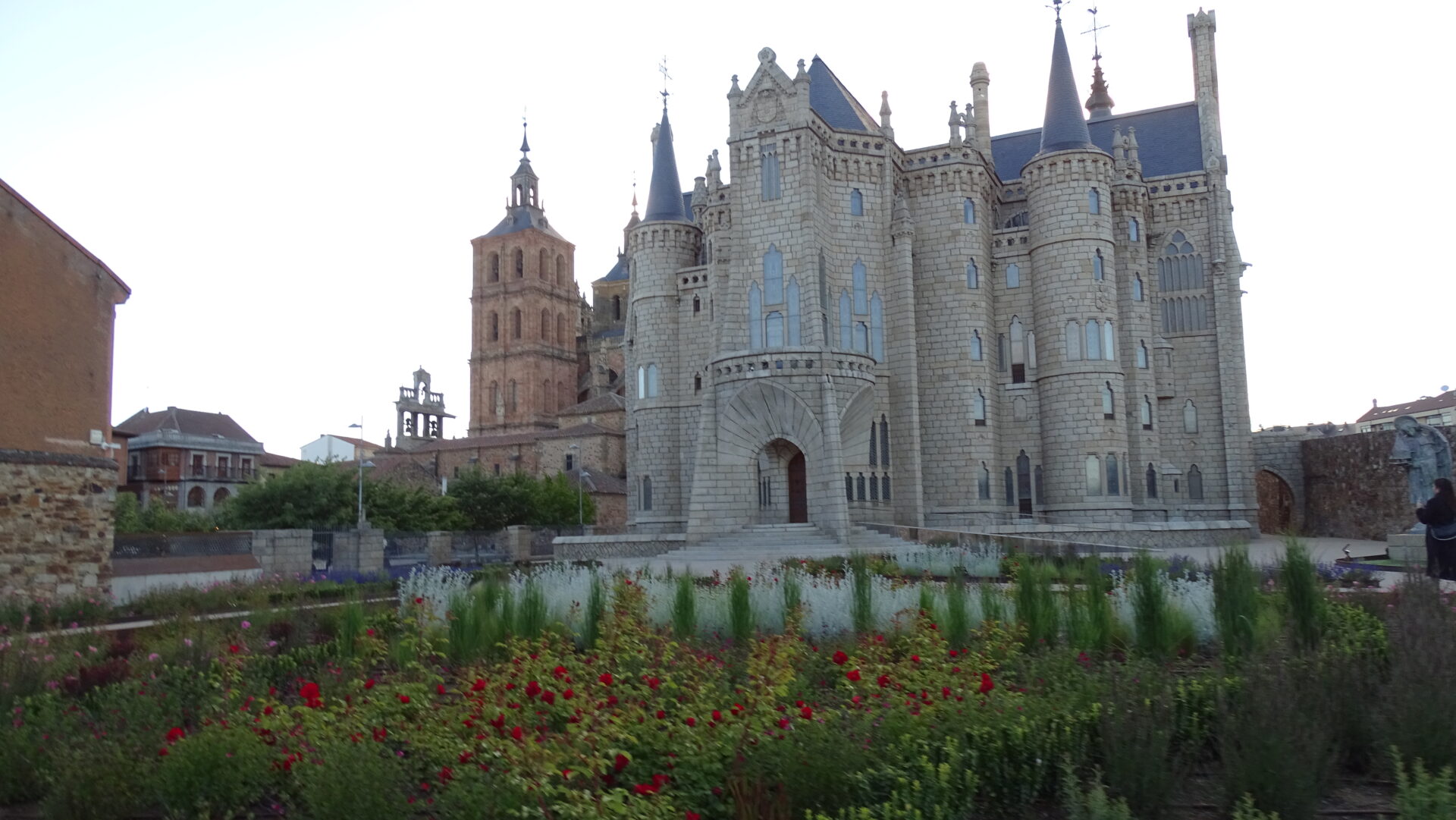
The project of the Episcopal Palace of Astorga was administratively complex and full of uncertainties for Antonio Gaudí, who had to submit to the tutelage (after the decisive mediation to obtain economic funds from the then Governor of the Bank of Spain, the Astorga-born Mr. Pío Gullón Iglesias), the Ministry of Grace and Justice and the Royal Academy of Fine Arts of San Fernando, which always bothered the architect and which was carried out thanks to the unconditional support of the architect. Pío Gullón Iglesias), the Ministry of Grace and Justice and the Royal Academy of Fine Arts of San Fernando, which always bothered the architect and which was overcome thanks to the unconditional support of his friend and spiritual mentor Juan Grau y Vallespinós, bishop of Astorga.
The corrections to his architectural proposals that Gaudí had to accept with little pleasure, in addition to the delay in the payment of his fees, caused a tense climate during the six years in which the architect was in charge of the works.
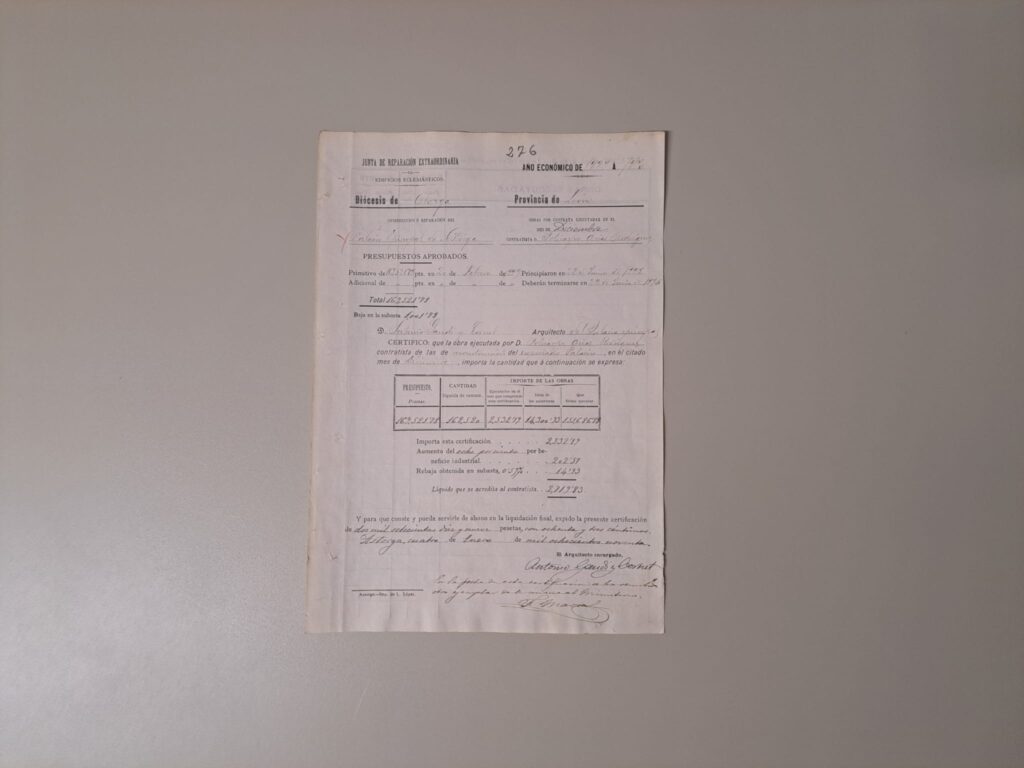
The construction certificate signed by Gaudí and exhibited here shows us some very interesting data, such as the initial approved budget, the estimated duration of the works or the name of the first contractor of the Palace, Policarpo Arias.
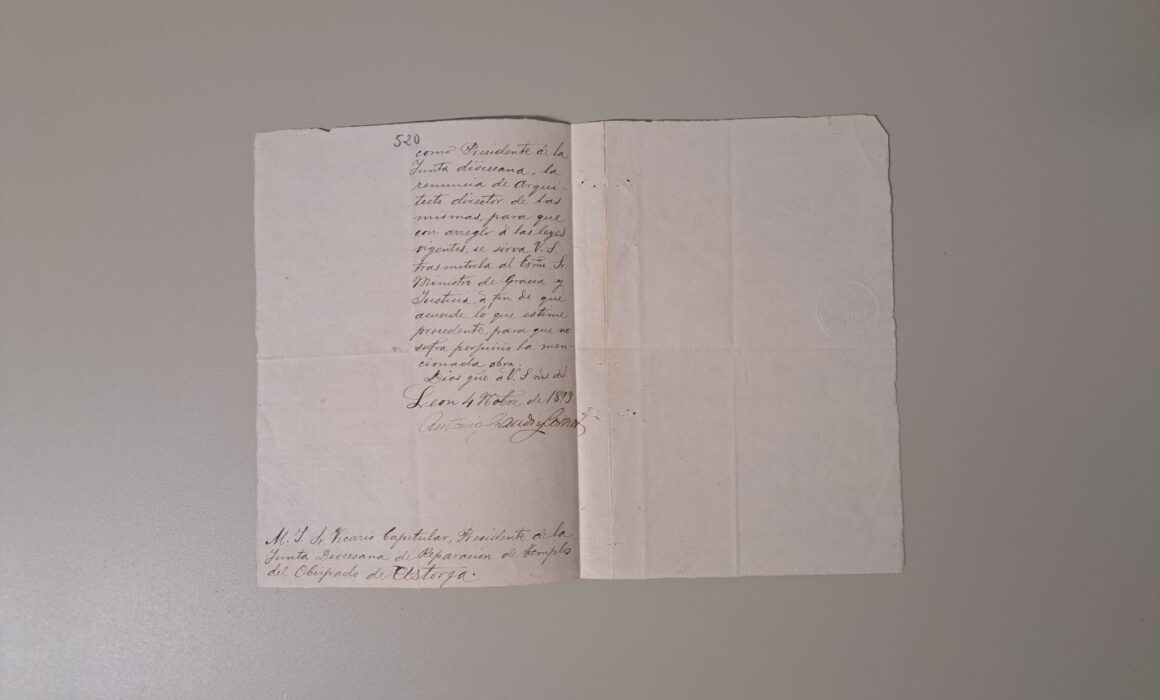
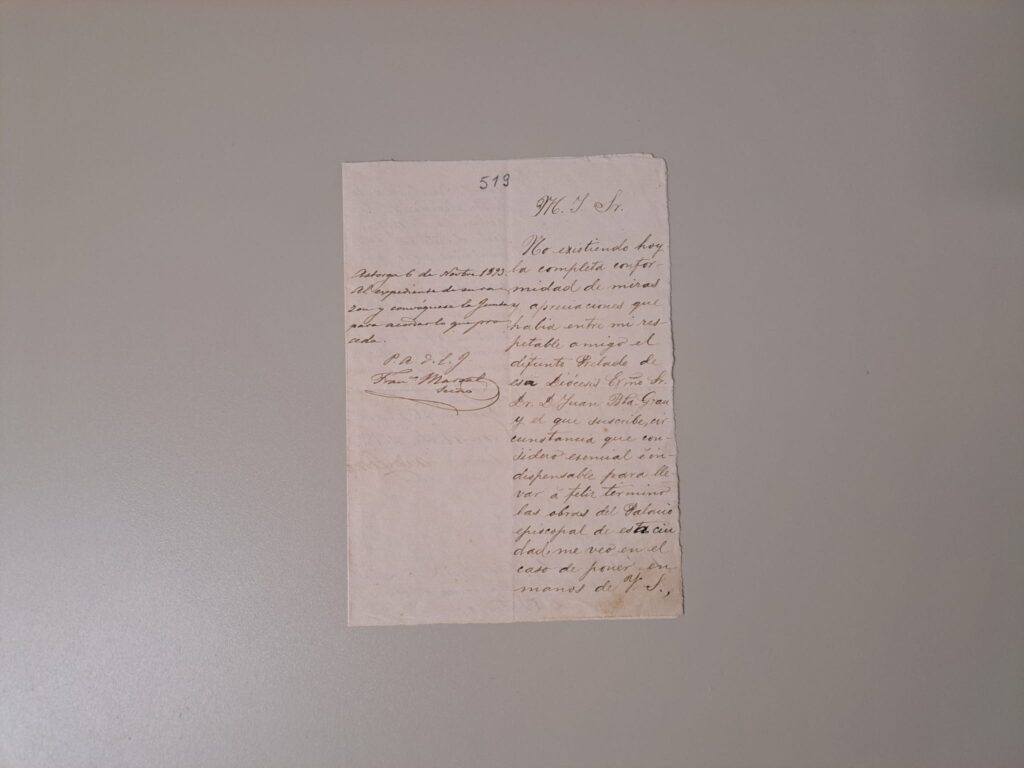
Despite everything that surrounded the project, institutionally and administratively speaking, Gaudí’s work in Astorga is undoubtedly linked to the personal bond between the architect and Bishop Grau. The friendship that was consolidated over the years, thanks among other things to Gaudí’s trips to Astorga, in which he acknowledged “the most affable treatment received…”, came to an end with the unexpected death of the prelate in the autumn of 1893. After the death of his friend and with the episcopal see vacant, the Diocesan Board took over the direction of the project and began a brief but decisive period of dissension that plunged the architect into loneliness and incomprehension and which concluded with the simple and enlightening letter of resignation to continue as architect, sent by Gaudí from León on November 4, 1893, which is highlighted in this month of February.
After a long period of inactivity, almost to the point of abandonment and oblivion, the works were completed 20 years later under the direction of Ricardo García Guereta.
Both documents, from the Diocesan Archive of Astorga and guarded by the Museum of the Roads, are on display until the end of the month in a prominent place on the second floor, from March they will be moved to a point on the main floor where they will interact until the end of the year with the permanent exhibition of the Museum of the Roads of the Gaudí Palace. This year the temporary exhibition of the Piece of the Month will be dedicated to the Catalan architect in the year that marks the centenary of his death.